
5 Key Quality Control Steps Every Activewear Brand Should Know
As an activewear brand owner, you know that quality isn't just a feature—it's the foundation of your business. It directly shapes customer satisfaction, dictates your brand's reputation, and ultimately determines your success in the fiercely competitive custom sportswear market. Delivering high-quality garments isn't an option; it's the price of entry. However, the activewear industry is uniquely challenging, with its breakneck product cycles and complex global supply chains. This complexity transforms robust quality control from a mere best practice into an absolute necessity for survival and growth.
The core principle to remember is this: Quality is not created during the final inspection—it is built into every step of the production process. Many brands fall into the trap of thinking quality is something you check for at the end. But what happens when you find a major issue after 10,000 units have already been produced? The damage, both financially and to your timeline, is already done. True quality mastery comes from preventing defects, not just finding them.
Through our extensive experience at AOLAFREE, we've witnessed a pivotal shift. Moving away from reactive, manual checks toward a proactive, data-driven quality control system is the single most powerful change any activewear manufacturer can make to excel in custom sportswear and build a lasting brand. This article will guide you through the five key quality control steps that embed quality into your production from day one, explaining why customers worry about quality, where problems typically arise, and how you can implement a system to prevent them before they start.
Key Takeaways
- Proactive Inspections are Crucial: Implementing Pre-Production and In-Process Inspections is non-negotiable. These steps allow you to verify materials and catch manufacturing defects early, saving immense costs and preventing delays by ensuring quality is built-in, not just inspected at the end.
- Supplier Partnership is Key: The quality of your product is a direct reflection of your manufacturing partner. A thorough supplier assessment process, clear standards, and consistent communication are fundamental to achieving reliable and high-quality output for both standard and OEM activewear.
- Embrace a Data-Driven Approach: Shift from merely finding defects to analyzing them. By systematically capturing quality findings and implementing a Corrective and Preventive Action (CAPA) plan, you can uncover root causes and make continuous improvements, turning potential failures into learning opportunities.
- Strong Documentation and Risk Assessment Form Your Foundation: Clear, centralized documentation like tech packs and a proactive risk assessment strategy are your "single source of truth" and your early warning system. They prevent ambiguity and allow you to mitigate potential issues before they impact production.
- Leverage Customer Feedback as Your Final QC Check: The quality journey extends beyond shipment. Systematically harnessing customer complaints and reviews provides invaluable, real-world data that should be fed back into your entire quality control system to drive meaningful, customer-centric improvements for future collections.
Mastering Quality Control from the Start: Audits and Activewear Sampling
The most effective way to manage quality is to address it at the earliest possible stage. For activewear, this means starting long before the first yard of fabric is cut for mass production. This initial phase, encompassing pre-production checks and sampling, is your first and best opportunity to lay a foundation for excellence. It’s here that you can align expectations, verify components, and establish the clear, non-negotiable standards that will guide the entire manufacturing run. Think of this not as a hurdle, but as the blueprint for a successful product launch.
Why Pre-Production Inspections Matter for Your Custom Sportswear
A Pre-Production Inspection (PPI) is the cornerstone of proactive quality management. It's a detailed assessment conducted before mass production begins, designed to identify and mitigate risks at their source. Waiting until the final inspection to catch a fundamental error is a recipe for disaster. Imagine discovering that the "solar red" fabric you approved is actually a shade off, or that the zippers are not the YKK ones you specified, only after your entire order has been produced. A PPI prevents these costly mistakes.
This inspection serves as a critical checkpoint to verify that your manufacturer fully understands your requirements and is prepared for production. During a PPI, an inspector physically examines all the raw materials and components—fabrics, trims, accessories, and packaging materials—against your approved standards and tech pack. This process confirms their quality, condition, and availability, ensuring there are no last-minute substitutions with cheaper alternatives. Furthermore, a PPI provides a clear view of the production schedule and factory readiness, helping to anticipate potential delays or quality issues before they can disrupt your supply chain. It’s your best defense against misunderstandings and your guarantee that production starts on the right foot.
Keeping Your Activewear Manufacturer Accountable with In-Process Quality Checks
While a PPI sets the stage, quality control must continue once production is underway. This is where In-Process Quality Checks, also known as During Production Inspections (DUPRO), become essential. These inspections are typically performed when about 15-20% of the goods have been produced. Their purpose is to identify any defects or deviations from your standards early in the manufacturing cycle, rather than waiting until the end when it's too late or too expensive to fix them.
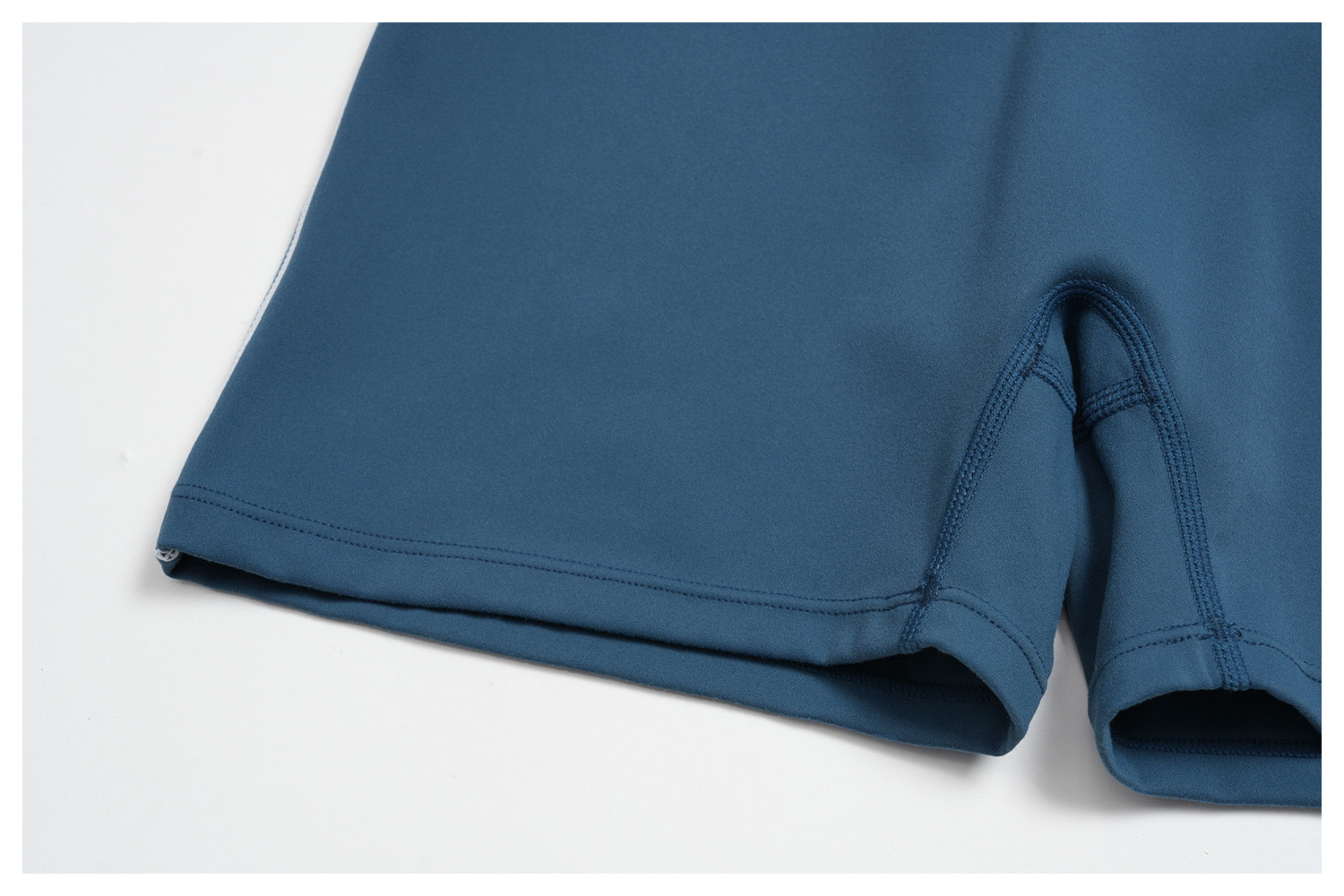
In-process checks move the focus from raw materials to workmanship and assembly. Inspectors will pull items directly from the production line to scrutinize aspects like:
- Stitching Quality: Are stitches per inch consistent? Are there any skipped or loose stitches?
- Seam Strength and Alignment: Are seams durable enough for athletic movement? Are they straight and properly aligned?
- Measurements and Fit: Do the garments coming off the line match the approved sample's measurements within the specified tolerance?
- Workmanship: Is the overall construction clean and professional, with no uncut threads or cosmetic flaws?
By catching issues like incorrect stitching or measurement drift at this stage, you can provide immediate feedback to the factory. This allows for on-the-spot corrections and process adjustments, preventing the same error from being replicated across the entire production run. This continuous monitoring is vital for maintaining consistent quality and ensures the final product meets the high standards your customers expect.
Partnering for Perfection: Effective Supplier Assessment for Your Activewear Manufacturer and OEM Activewear
The quality of your activewear is inextricably linked to the quality of your manufacturing partner. You can have the most innovative designs and highest-grade material specs, but if your production partner lacks the expertise, equipment, or commitment to excellence, your final product will inevitably fall short. Choosing a manufacturer is not a simple sourcing task; it is the formation of a critical partnership. This is why a rigorous, multi-faceted assessment process is fundamental to ensuring your brand's vision is executed flawlessly, whether you are creating a custom line or leveraging an Original Equipment Manufacturer (OEM) for scalable production.
Choosing the Right Activewear Manufacturer: Our AOLAFREE Standards
Selecting the right manufacturing partner is one of the most critical decisions a brand will make, directly impacting product quality, cost, and reputation. At AOLAFREE, we believe a partnership should be built on a foundation of transparency, expertise, and a shared commitment to quality. When we vet a potential partner, or when a brand evaluates us, we focus on a clear set of standards.
First and foremost is an evaluation of technical capability and product specialization. Activewear is a highly technical category. A factory must have specialized machinery like flatlock and overlock machines, and expertise in working with performance fabrics that stretch, wick moisture, and offer compression. We assess a manufacturer's experience with these specific materials and complex garment constructions. Beyond machinery, we scrutinize their Quality Management System (QMS). This includes looking for internationally recognized certifications like ISO 9001, which demonstrates a commitment to consistent quality management, and OEKO-TEX®, which ensures textile safety.
Finally, we believe in assessing a partner's reliability and communication style. A partnership cannot succeed without clear, consistent communication and mutual respect. We look for partners who are responsive, transparent, and willing to collaborate on problem-solving. This includes evaluating their production capacity, lead times, and Minimum Order Quantities (MOQs) to ensure they align with a brand's business needs and can scale for future growth.
Driving Consistent Quality with Your OEM Activewear Partners
Forging a strong, long-term relationship with an Original Equipment Manufacturer (OEM) partner is about more than just a single transaction; it's a strategic alliance for growth. This kind of partnership is essential for maintaining consistent product quality and driving innovation across multiple collections. The key to success lies in moving beyond a simple buyer-supplier dynamic to one of true collaboration.
A critical tool for achieving this is the Manufacturing Agreement. This legally binding document is the blueprint for the relationship, setting clear and precise expectations for everything from quality standards and material specifications to delivery timelines and intellectual property rights. The agreement should explicitly detail quality control procedures, acceptable defect rates (often defined by AQL standards), and the consequences of non-compliance. This removes ambiguity and ensures both parties are aligned on what constitutes a quality product.
Beyond the initial contract, consistent quality is maintained through open communication and performance monitoring. This involves establishing regular feedback sessions, sharing sell-through data and customer insights, and collaboratively problem-solving when issues arise. When a factory understands your brand's goals and challenges, they can become a proactive partner, suggesting process improvements or new materials. By investing in the relationship and treating your OEM as a strategic partner, you foster a shared commitment to excellence that results in higher quality products and a more resilient supply chain.
| Supplier Assessment Metric | Why It Matters for Activewear Quality | AOLAFREE Standard |
|---|---|---|
| Technical Specialization | Activewear requires expertise in performance fabrics (e.g., moisture-wicking, compression) and specialized construction techniques (e.g., flatlock seams). | We partner exclusively with factories that have proven experience and dedicated machinery for athletic apparel, ensuring garment function and durability. |
| Quality Management System (QMS) | A documented QMS (like ISO 9001) shows a commitment to repeatable processes, defect prevention, and continuous improvement. | Partners must demonstrate a robust, integrated QC system at all stages: incoming materials, in-process assembly, and final inspection. |
| Certifications | Certifications like OEKO-TEX®, GOTS, or Bluesign® verify that materials are safe, non-toxic, and/or produced sustainably and ethically. | We prioritize factories with relevant certifications to guarantee product safety and support brand claims of sustainability and ethical production. |
| Communication & Transparency | Clear, proactive communication prevents costly misunderstandings regarding specs, timelines, and quality issues. | We establish designated points of contact and a protocol for regular updates, ensuring brand partners have full visibility into the production process. |
| Production Capacity & Scalability | The manufacturer must be able to meet current order volumes (MOQs) and have the capacity to scale as your brand grows. | We assess a factory's production output and flexibility to ensure it aligns with both the immediate and long-term goals of our brand partners. |
Turning Challenges into Strengths: CAPA and Data-Driven Quality Control Findings
A truly mature quality management system doesn't just find defects; it learns from them. The goal isn't simply to identify issues during an inspection but to use those findings as data points to drive meaningful, long-term improvements. This is the transition from a reactive to a proactive and predictive quality culture. By systematically capturing and analyzing every deviation and implementing a robust Corrective and Preventive Action (CAPA) framework, brands can turn production challenges into powerful opportunities for strengthening their entire manufacturing process.
Capturing and Prioritizing Quality Findings for Your Custom Sportswear
Every deviation from the approved standard—whether discovered in raw materials, during production, or from customer feedback—is considered a "quality finding." These are not just mistakes; they are crucial pieces of data. To leverage this data, you must first capture it systematically. Gone are the days of scribbled notes and inconsistent reports. A modern approach uses digital checklists and photo-based evidence to ensure every detail is recorded accurately and consistently across all inspections.
Once captured, findings need to be classified to be prioritized effectively. Without classification, a team can waste valuable time and resources fixing minor issues while critical problems go unaddressed. A standard classification system used across the apparel industry categorizes defects into three levels:
- Critical Defects: Issues that pose a safety hazard to the user or violate regulations (e.g., a broken needle left in a garment, use of a banned chemical). A single critical defect often leads to the rejection of an entire order.
- Major Defects: Flaws that are likely to affect the garment's fit, function, or appearance, making it unsellable or likely to be returned (e.g., incorrect sizing, open seams, large stains).
- Minor Defects: Small imperfections that do not affect the usability of the garment and are unlikely to be noticed by most customers (e.g., a few untrimmed threads, slight shade variation in a non-visible area).
By categorizing defects this way, you can apply standards like the Acceptable Quality Limit (AQL), which defines the maximum number of defects allowed in a batch. This allows for data-driven decisions on whether to accept, reject, or rework an order, turning subjective opinions into objective, actionable insights.
Implementing CAPA: The Core of Continuous Quality Control Improvement
Capturing and classifying defects is only half the battle. To prevent them from happening again, you must implement a Corrective and Preventive Action (CAPA) plan. CAPA is a systematic process used in quality management to investigate and solve problems, ensuring they don't recur. It forms the backbone of any continuous improvement culture. The process consists of two distinct but related parts:
Corrective Action (CA): This is the immediate, reactive step. It addresses the existing problem to contain the damage. For example, if an in-process inspection finds a batch of leggings with weak seams, the corrective action would be to segregate the defective units and have them re-stitched correctly. The goal is to fix the non-conformity that has already occurred.
Preventive Action (PA): This is the proactive, long-term solution. It focuses on identifying and eliminating the root cause of the problem to prevent it from ever happening again. In the weak seam example, a root cause analysis might reveal the issue wasn't the operator, but that the sewing machine's tension was improperly calibrated. The preventive action would be to implement a new daily machine calibration log and retrain maintenance staff. This moves beyond fixing a single bad batch to improving the entire system.
Tools like the 5 Whys or a Fishbone (Ishikawa) Diagram are commonly used to drill down to the true root cause. By moving beyond surface-level symptoms (like "operator error") to find the underlying systemic cause (like "inadequate training" or "poorly maintained equipment"), a brand and its manufacturer can make meaningful process improvements. This transforms quality control from a cost center focused on catching mistakes into a value-adding engine for operational excellence.
Building a Solid Foundation: Document Management and Risk Assessment for Activewear Success
In the complex world of apparel manufacturing, ambiguity is the enemy of quality. A solid foundation for any successful production run is built on two core pillars: crystal-clear documentation and proactive risk assessment. These elements work together to create a "single source of truth" and an early warning system, ensuring that every person involved in the process—from the designer to the factory floor operator—is perfectly aligned. This structured approach prevents misunderstandings, minimizes errors, and systematically de-risks the entire journey from concept to consumer.
Streamlining Documentation: A Must for Any Activewear Manufacturer
Effective documentation is the backbone of consistent and high-quality manufacturing. Without it, production becomes a chaotic guessing game leading to costly mistakes, delays, and inconsistent output. The most critical document in apparel production is the Tech Pack. Think of it as the master blueprint for your garment. A comprehensive tech pack is not just a sketch; it's a detailed document that includes everything a factory needs to create the product exactly as you envisioned.
Key components of a professional tech pack include:
- Technical Drawings: Flat sketches showing every detail from the front, back, and side views.
- Bill of Materials (BOM): An itemized list of every single component, from the main fabric down to the specific type of thread and branded zipper pulls.
- Measurement Spec Sheet: Precise measurements for a base size, along with grade rules for scaling up and down to other sizes, including acceptable tolerances.
- Construction Details: Instructions on how the garment should be sewn, specifying stitch types (e.g., flatlock seams), seam allowances, and finishing techniques.
- Colorway Information: Pantone codes and placement details for all colors used in fabrics, trims, and prints.
- Artwork and Labeling: Exact placement, dimensions, and application methods for logos, prints, and all required labels (main, care, size).
When this tech pack is managed through a centralized Document Management System (DMS), it ensures that everyone is working from the most current version. This "single source of truth" eliminates confusion caused by outdated spreadsheets or email chains, providing a clear and traceable record that is essential for quality control, compliance, and efficient production.
Proactive Risk Assessment in Your Activewear Production
While excellent documentation defines what's right, proactive risk assessment anticipates what could go wrong. Instead of waiting for problems to occur, a risk-based approach systematically identifies potential failures before they happen. In manufacturing, a common methodology for this is Failure Modes and Effects Analysis (FMEA). FMEA is a structured way to review processes and identify potential failure points, their potential consequences, and what can be done to prevent them.
For an activewear brand, this could involve assessing risks at various stages:
- Material Risk: A new, lightweight fabric might have a high risk of pilling or tearing. The mitigation plan could involve ordering third-party lab tests for abrasion resistance before approving the fabric for production.
- Production Risk: A complex, multi-panel legging design has a higher risk of seam misalignment. A control measure would be to increase the frequency of in-process inspections specifically for that sewing operation.
- Chemical Risk: Certain dyes or finishing agents could contain restricted substances that violate regulations like California Proposition 65. A proactive approach involves requiring chemical safety certifications (like OEKO-TEX®) from fabric suppliers as a non-negotiable part of the sourcing process.
- Workplace Hazards: The manufacturing process itself has inherent risks, from cutting machines to hot presses, that can impact worker safety and production continuity. A thorough risk assessment includes evaluating and ensuring proper safety guards, training, and procedures are in place.
By conducting a risk assessment, you shift from a reactive, problem-solving mode to a proactive, problem-prevention mode. This not only protects product quality but also enhances safety, ensures regulatory compliance, and prevents costly delays, creating a more resilient and reliable production environment.
From Feedback to Flawless: Customer Complaints and Continuous Improvement in Activewear Production
The quality control journey doesn't end when a product is shipped. In many ways, that’s when the most important phase begins: real-world testing by your customers. Every piece of customer feedback, whether it’s a glowing five-star review, a direct message about fit, or a formal complaint about a defect, is an invaluable data point. Harnessing these insights and feeding them back into your production process closes the quality loop, creating a powerful cycle of continuous improvement that drives product excellence and builds unshakeable brand loyalty.
Harnessing Customer Insights to Elevate Your Custom Sportswear Quality
Your customers are your ultimate quality control inspectors. They are the ones testing your activewear under the exact conditions it was designed for—stretching during yoga, enduring a high-intensity workout, or going through repeated wash cycles. Their experiences provide the most authentic "Voice of the Customer" (VoC), a concept that describes a deep understanding of customer requirements and expectations. Ignoring this feedback is a massive missed opportunity; embracing it is a direct path to a better product.
When a customer complains, it's crucial not to view it as a confrontation but as a consultation. Handle every complaint with urgency and empathy, acknowledging the issue promptly and without admitting fault until all facts are gathered. A structured process for handling complaints should include:
- Systematic Collection: Gather feedback from all channels—customer service emails, social media comments, online reviews, and return reasons.
- Detailed Information Gathering: When a defect is reported, request specifics like order numbers, photos, and lot numbers if available. This helps trace the issue back to a specific production batch.
- Analysis and Categorization: Analyze the collected data for patterns. Are multiple customers reporting that the same seam is failing on a particular style of leggings? Is there a trend of a certain color fading prematurely? This analysis turns individual complaints into actionable trends.
For example, if several customers report that a sports bra's waistband is losing elasticity after a few washes, this insight is a direct signal to your quality team. It initiates an investigation that might lead back to a raw material issue (a faulty batch of elastic) or a production problem (heat from a finishing process damaging the elastic). By connecting customer feedback directly to your pre-production and in-process quality checks, you can prevent this issue from ever affecting future production runs and build a product that your customers can truly rely on.
The Future of Quality Control: A Data-Driven Approach for OEM Activewear Brands
The future of quality control is intelligent, interconnected, and driven by data. The traditional model of isolated, manual inspections is being replaced by a holistic ecosystem where information flows seamlessly from the factory floor to the customer and back again. For OEM activewear brands, adopting this data-driven approach is no longer a competitive advantage—it's essential for survival and growth in a complex global market.
This new paradigm is powered by technology:
- AI and Machine Vision: In textile manufacturing, AI-powered cameras are now used for fabric inspection, capable of detecting subtle defects like misweaves or color inconsistencies with over 99% accuracy—far surpassing human capability. These systems operate 24/7, ensuring that flawed materials are caught before they ever enter the production line.
- IoT (Internet of Things) Sensors: Sensors placed on manufacturing equipment can monitor parameters like sewing machine tension or dye bath temperatures in real-time. This data provides early warnings of process deviations, allowing for automated adjustments or "predictive maintenance" that prevents defects from occurring.
- Digital Quality Management Systems (QMS): Modern QMS platforms unify all quality-related data. Inspection reports, CAPA plans, supplier audits, and customer feedback are no longer stored in separate spreadsheets. Instead, they are integrated into a single dashboard, providing end-to-end visibility and making it possible to spot trends and identify root causes with unprecedented speed and accuracy.
This data-driven ecosystem transforms quality control from a series of disjointed checks into a strategic, proactive function. It enables manufacturers like AOLAFREE to not only catch defects but to predict and prevent them, reduce waste, and continuously optimize every aspect of production. For brands, this means higher quality products, a more reliable supply chain, and the confidence that you are delivering excellence to your customers with every single garment.
Key Takeaways
- Proactive inspections are invaluable: Brands can avoid costly errors and delays by conducting thorough pre-production and in-process checks to guarantee quality from the start.
- Strong supplier partnerships are essential: A manufacturer's quality directly impacts the final product, so rigorous vetting and clear communication are crucial for reliable OEM activewear.
- Data analysis is transformative: Moving from simply finding defects to analyzing them through a Corrective and Preventive Action (CAPA) plan uncovers root causes and fosters continuous improvement.
- Documentation and risk assessment are foundational: Centralized documentation, like tech packs, and proactive risk assessments prevent ambiguity and mitigate issues before they arise.
- Customer feedback closes the loop: Using customer complaints and reviews as real-world data is key to making meaningful, customer-focused improvements.
Frequently Asked Questions (FAQ)
Q1: What is AQL and why is it important in activewear quality control? AQL stands for Acceptable Quality Limit. It is a statistical method used in inspections to determine the maximum number of defective units that can be considered acceptable in a randomly selected sample from a production batch. For activewear, which requires high performance and durability, a stricter AQL (e.g., AQL 1.5) might be used compared to general apparel (e.g., AQL 2.5). It's important because it provides an objective, data-based standard for making decisions to accept or reject an order, ensuring quality is measured consistently rather than subjectively.
Q2: How can I ensure my manufacturer truly understands my quality standards? The most effective way is through comprehensive documentation and clear communication. Your tech pack is the single most important document; it must be incredibly detailed, covering everything from fabric composition and Pantone colors to stitch types and measurement tolerances. supplement this with approved "golden samples" that serve as the physical benchmark for production. Finally, establish a clear manufacturing agreement that contractually defines quality expectations, inspection processes, and the consequences of non-compliance.
Q3: What's the difference between Quality Control (QC) and Quality Assurance (QA)? Think of Quality Assurance (QA) as proactive and Quality Control (QC) as reactive. QA is the overall process and system you put in place to prevent defects from happening. This includes activities like vetting suppliers, creating detailed tech packs, and implementing a CAPA system. QC, on the other hand, refers to the specific inspection activities—like checking raw materials or finished garments—used to identify defects. A strong quality strategy needs both: a great QA system to build quality into the process, and effective QC checks to verify that the system is working.
Q4: How can a small activewear brand afford to implement such a detailed QC process? While it may seem costly, the cost of not having a robust QC process is far greater. A single product recall or a batch of unsellable goods due to a preventable defect can be financially devastating. Small brands can start by:
- Creating extremely detailed tech packs to minimize ambiguity.
- Building a strong relationship with a transparent and reputable manufacturer who has their own robust internal QC.
- Focusing inspections on the highest-risk areas of production (e.g., pre-production material checks and a final random inspection).
- Leveraging customer feedback as a free and invaluable source of quality data.
Q5: Where do most quality problems originate in activewear production? Quality problems can arise at any stage, but they often stem from a few key areas. The most common origins are:
- Raw Materials: Using substandard fabrics or trims that don't meet performance specifications for stretch, moisture-wicking, or colorfastness.
- Pre-Production: Misinterpreting the tech pack due to lack of detail, leading to incorrect patterns or specs.
- Sewing & Construction: Inconsistent workmanship on the factory floor, often due to rushed production or inadequately trained operators, leading to issues like weak seams or incorrect fit. This highlights why inspections at each of these key stages are so critical to prevent minor issues from becoming major problems.
Conclusion
By embedding quality into the core of your production strategy through these five crucial steps—from rigorous initial audits and supplier vetting to data-driven improvement and harnessing customer feedback—your activewear brand can rise above the competition. For businesses specializing in custom sportswear, adopting these practices isn't just about meeting standards; it's about consistently exceeding customer expectations and building a brand that people trust for its durability, performance, and fit.
Moving to a data-driven quality control system is more than an operational upgrade; it's a fundamental shift in mindset. It is the key to drastically reducing defects, cutting the hidden costs of poor quality, and forging an unshakeable brand reputation in the dynamic activewear market. Quality becomes a culture, not just a department.
At AOLAFREE, our mission is to serve as a partner in excellence. We are dedicated to helping you integrate these essential quality control practices into your supply chain. We invite you to learn more about our commitment to quality on our About US page. If you're ready to build a brand defined by quality and delight your customers with every product, we encourage you to Start Your project with us today.