Choosing the Right Women’s Activewear Manufacturer for Your Brand
As a brand owner in the dynamic activewear market, I understand that selecting the right manufacturing partner is a strategic investment critical to our success. The global activewear market was valued at USD 345.79 billion in 2025 and is projected to grow significantly, reaching USD 720.25 billion by 2034. This immense growth highlights the opportunity, but also the competition. My choice of women’s activewear manufacturer directly influences product quality, brand reputation, and market viability.
This guide provides an essential framework for making that crucial decision, helping us navigate the complexities of the industry. It's designed to be a comprehensive resource, blending expert insights with practical, actionable steps.
I aim to identify a partner who not only aligns with our brand's values but also supports our long-term growth and market presence. With the right manufacturer, our brand can thrive, deliver exceptional products, and build lasting customer loyalty in this booming market.
Key Takeaways
- Define Your Vision: Before you start searching for a manufacturer, have a crystal-clear vision for your brand. Know your target audience (e.g., millennial women, professional athletes), your unique selling proposition (e.g., sustainability, high-performance tech), and your product strategy. This clarity is your most valuable negotiating tool.
- Understand Manufacturing Models: Know the difference between OEM, ODM, and Private Label. OEM (Original Equipment Manufacturer) offers full customization but requires more design input from you. ODM (Original Design Manufacturer) is faster and uses the factory's existing designs, which you can modify. Private label is a branding model that can use either OEM or ODM production. Choosing the right model depends on your brand's stage, design capabilities, and speed-to-market needs.
- Prioritize the Pillars: Your evaluation should rest on three core pillars:
- Quality Workmanship: This is non-negotiable. Assess everything from fabric durability and stretch recovery to the type of stitching (e.g., flatlock seams to prevent chafing).
- Sustainability & Ethics: Modern consumers, particularly in the West, are driven by environmental and ethical considerations. Look for certifications like OEKO-TEX, GRS (Global Recycled Standard), and fair labor practices (e.g., BSCI). This is a brand value, not just a feature.
- Minimum Order Quantities (MOQs): MOQs are the minimum units a factory will produce per style/color. They can range from 50-200 for specialists to over 1,000 for large-scale factories. Understand that MOQs are set to ensure production is cost-effective for the manufacturer, covering fixed costs like machine setup and dye lots.
- Communication is Key: A detailed Technical Pack (Tech Pack) is the single most important document in apparel production. It's the blueprint that translates your design into a physical garment, including sketches, measurements, Bill of Materials (BOM), and construction details. A complete tech pack prevents costly errors and delays.
- Never Skip Sampling: The sampling and prototyping stage is your greatest risk-mitigation tool. It allows you to test fit, function, and materials before committing to a bulk order. Fixing an issue at the prototype stage is exponentially cheaper than fixing it during mass production.
- Build a Strategic Partnership: View your manufacturer as a long-term partner, not a one-time vendor. Evaluate their communication standards, scalability to grow with your brand, supply chain expertise, and financial stability. A strong relationship built on transparency and mutual trust is the foundation for sustainable success.
Identifying the Ideal Women’s Activewear Manufacturer and Activewear Supplier: Understanding Our Needs
The first step in this journey isn't looking outward at factories, but inward at your own brand. A precise understanding of your needs, vision, and operational requirements will function as your compass, guiding you toward a manufacturing partner who is not just a supplier, but a true extension of your brand. Without this internal clarity, the vast sea of global manufacturing options can be overwhelming and lead to costly mismatches.
Defining Our Brand's Vision and Product Strategy
Before you can choose the right partner, you must define who you are as a brand. What is your unique place in the crowded activewear market? A strong brand vision is the foundation of your product strategy and will dictate the type of manufacturer you need.
Start by defining your target audience with precision. Are you catering to elite athletes, yoga enthusiasts, or the broader "athleisure" market? Research shows that women are the key demographic for activewear purchases, with millennials and Gen Z being major consumers. However, the specific niche you choose will inform every decision. For example, a brand targeting high-performance athletes will prioritize technical fabrics and construction, while a brand focused on studio-to-street wear might emphasize style, comfort, and unique colorways.
Next, articulate your Unique Selling Proposition (USP). Is it unparalleled comfort, cutting-edge fabric technology, an unwavering commitment to sustainability, or an inclusive size range? Your USP must be clear and compelling. This will directly influence specifications for your manufacturer. If sustainability is your core value, you'll need a partner with certifications for recycled materials and ethical labor practices. If performance is key, you'll need a factory with expertise in specialized construction like seamless knitting or compression technology. Finally, translate this vision into a concrete product strategy: what specific items will you launch with? Leggings, sports bras, tops? Defining your initial collection helps you find a manufacturer with the right machinery and expertise for those specific garments.
Distinguishing Between Activewear Supplier Models
The terms OEM, ODM, and Private Label are often used interchangeably, but they represent fundamentally different manufacturing relationships, each with distinct implications for your brand's control, cost, and speed to market. Understanding these models is critical to selecting a partner that aligns with your business strategy.
OEM Activewear vs. ODM vs. Private Label
Think of these models on a spectrum of customization and design ownership.
OEM (Original Equipment Manufacturer): In this model, you provide the complete design, and the manufacturer builds it to your exact specifications. You bring a detailed technical pack (tech pack) with your unique patterns, fabric choices, and construction methods. This offers the highest level of customization and ensures your product is exclusive to your brand. It's the ideal path for brands with a strong, unique design vision. However, it requires more upfront investment in design and development, a longer timeline, and typically higher MOQs.
ODM (Original Design Manufacturer): With ODM, you select from the manufacturer's existing, pre-developed designs and customize them with your branding. You can typically change colors, fabrics, and add your logo, but the base pattern and construction belong to the factory. This model is significantly faster and more cost-effective, making it a great choice for startups or brands looking to launch quickly and test the market with proven designs.
Private Label: This is a branding and sales model, not a production model. It means the product is sold exclusively under your brand name. A private label relationship can be built on either an OEM or ODM production structure. A manufacturer offering private label services essentially provides the framework for you to create a branded line, whether it's fully custom (OEM) or adapted from their catalog (ODM). This model is about creating a distinct brand identity in the market.
Here is a table to clarify the differences:
| Feature | OEM (Original Equipment Manufacturer) | ODM (Original Design Manufacturer) | White Label |
|---|---|---|---|
| Design Ownership | You (the brand) own the design. | The factory owns the base design. | The factory owns a generic design. |
| Customization | Full control over every detail (fabric, fit, construction, trims). | Limited to colors, branding, trims, and sometimes minor modifications. | Almost none; you just add your brand's label to a generic product. |
| Exclusivity | Product is 100% unique to your brand. | Base design is not exclusive and may be used by others, but your customized version is yours. | The exact same product is sold by multiple other brands. |
| Speed to Market | Slower due to design, development, and sampling. | Faster, as designs are production-ready. | Fastest, as products are ready to ship. |
| Upfront Cost | Higher, due to design, pattern-making, and sampling investment. | Lower, with minimal development costs. | Lowest, with no development costs. |
| Best For | Brands with a unique design vision and a focus on differentiation. | Brands wanting to launch quickly, test the market, or supplement a core range. | Marketplaces or brands testing a product category with minimal risk. |
As an expert manufacturer, AOLAFREE can guide you through these options to find the best fit for your brand's goals and budget.
The Specialist Women’s Activewear Manufacturer
While a general apparel factory might be able to produce leggings, a specialist women’s activewear manufacturer brings an entirely different level of expertise. The anatomy and performance needs of women's activewear are unique. A specialist understands the nuances of fit for different body types and activities, from high-impact sports bras to "squat-proof" leggings.
They possess specialized machinery, such as flatlock and coverstitch machines, which are essential for creating the comfortable, non-chafing seams expected in high-quality activewear. Furthermore, these manufacturers have deep knowledge of performance fabrics—materials with properties like four-way stretch, moisture-wicking, compression, and antibacterial finishes. They have established relationships with technical fabric mills and can source materials that a generalist factory might not have access to. Partnering with a specialist like us ensures that your product is not only well-made but also functional, comfortable, and tailored to the specific demands of your female customers.
Key Pillars: Quality, Sustainability, and M.O.Q.s
Once you have a clear vision and understand the manufacturing landscape, you must evaluate potential partners based on three fundamental pillars. These factors will ultimately determine the viability of your product, the integrity of your brand, and the health of your cash flow.
Prioritizing Quality Workmanship
In activewear, quality is synonymous with performance and comfort. It's a tangible attribute that customers feel immediately. Shoddy workmanship leads to poor reviews, high return rates, and irreparable brand damage. When assessing a manufacturer, look beyond the finished look and scrutinize the details.
Key indicators of quality workmanship include:
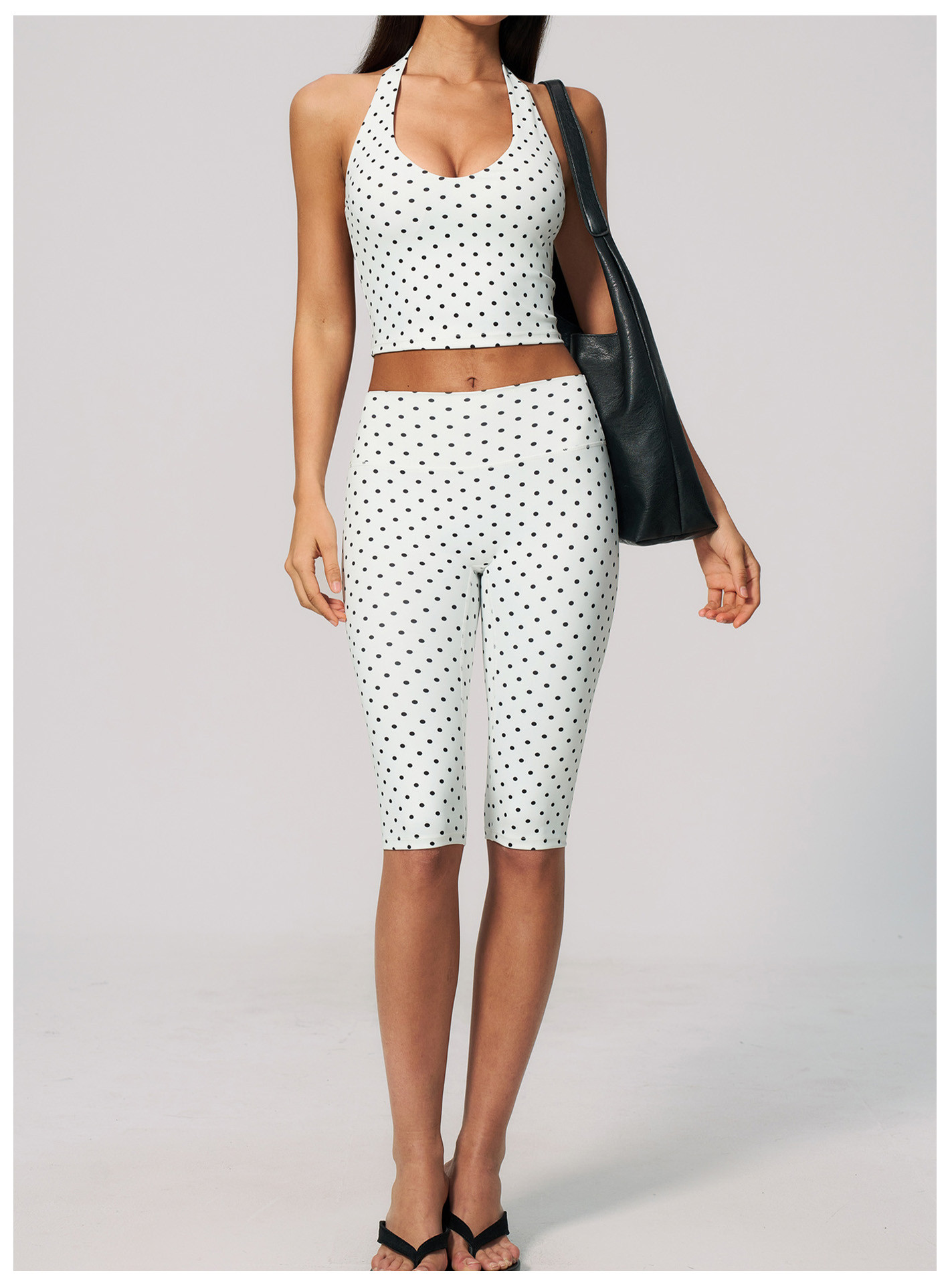
- Seam Construction: High-quality activewear often uses seamless construction or flatlock seams to eliminate chafing and increase durability. These techniques require specialized machinery and skill.
- Fabric Performance: Assess the fabric for key performance metrics. Good activewear fabric should have excellent stretch and recovery, meaning it snaps back into shape after being stretched. It should also be tested for pilling, colorfastness (resistance to fading from sweat and washing), and durability through abrasion testing.
- Fit and Sizing Consistency: A quality manufacturer will have a deep understanding of pattern-making and grading to ensure a consistent fit across all sizes. The fit should allow for a full range of motion without restriction.
- "Squat-Proof" Test: For leggings, a simple but critical test is holding the fabric up to a bright light. A high-quality, opaque fabric with a grams per square meter (GSM) of 200+ should block at least 90% of light, ensuring it's not see-through during movement.
Embracing Ethical and Sustainable Practices
Today's consumers are more informed and conscientious than ever. A brand's stance on sustainability and ethical production is no longer a "nice-to-have"—it's a core driver of purchasing decisions. Partnering with a manufacturer who shares these values is crucial for building a modern, trustworthy brand.
When evaluating a manufacturer, ask for proof of their ethical and sustainable practices:
- Certifications: Look for globally recognized certifications. OEKO-TEX ensures textiles are free from harmful substances, GRS (Global Recycled Standard) verifies recycled content, and social compliance audits like BSCI (Business Social Compliance Initiative) or WRAP ensure fair labor practices.
- Sustainable Materials: Inquire about their experience with eco-friendly fabrics like recycled polyester, recycled nylon, organic cotton, and bamboo. A progressive manufacturer will be actively sourcing and innovating in this area.
- Transparent Supply Chain: A trustworthy partner should be transparent about their supply chain, from fabric sourcing to dyeing and finishing. They should be able to speak to their efforts to reduce water usage, energy consumption, and waste in their production processes. Being open about our mission is important to us, and you can learn more on our About US page.
Minimum Order Quantities (M.O.Q.s)
MOQ, or Minimum Order Quantity, is the smallest number of units a factory is willing to produce for a single style or color. This is one of the most critical factors for brands, especially startups, as it directly impacts upfront investment and inventory risk. MOQs exist because factories have fixed costs for every production run—including fabric purchasing minimums from mills, machine setup, pattern grading, and labor—that must be spread across a certain number of units to be profitable.
- Understanding MOQ Ranges: MOQs vary widely. Small-batch specialists may offer MOQs as low as 50-150 units per style, while larger factories in Asia might require 1,000-5,000+ units. A typical range for activewear is often 100-300 pieces per style/color.
- Negotiating MOQs: While MOQs can seem rigid, there is often room for negotiation. Building a strong relationship and demonstrating long-term potential can make a manufacturer more flexible. Other strategies include:
- Using the manufacturer's in-stock fabrics, which eliminates pressure from mill MOQs.
- Offering to pay a surcharge for a smaller run.
- Limiting the number of colorways or sizes in your initial order.
- Committing to a follow-up order to show your intent to scale.
It's a delicate balance. A higher MOQ often leads to a lower cost-per-unit, but it also ties up more capital and increases the risk of unsold inventory. A good partner will work with you to find a starting point that is commercially viable for both parties.
Navigating OEM Activewear and Private Label Activewear Manufacturer Options for Quality and Growth
After defining your needs and identifying potential partners, the next phase involves the practical, hands-on process of bringing your product to life. This stage is a critical test of a manufacturer's technical skill, communication, and collaborative spirit. Whether you are pursuing a fully custom OEM path or a streamlined private label model, success hinges on precision, clear communication, and a rigorous validation process.
Design Communication and Technical Packs
Effective communication is the lifeblood of successful apparel manufacturing. Misunderstandings at this stage lead to wasted time, money, and materials. The single most important tool for ensuring clarity and precision is the Tech Pack (Technical Package).
A tech pack is a comprehensive blueprint that tells the manufacturer everything they need to know to create your garment. It's not just a sketch; it's a detailed set of instructions that leaves no room for guesswork. A professional tech pack includes:
- Technical Flat Sketches: These are two-dimensional black-and-white drawings of the garment's front, back, and side views, with callouts for every seam, stitch, and detail.
- Bill of Materials (BOM): A complete list of every single component required, including main fabric, lining, threads, zippers, buttons, drawstrings, and labels. It should specify material composition, weight (GSM), color (with Pantone codes), and supplier information if available.
- Measurement Specification Sheet: This includes precise measurements for a base-size garment and "grade rules" that dictate how the measurements change for other sizes in your range.
- Construction Details: Explicit instructions on how the garment should be assembled, specifying stitch types (e.g., 5-thread overlock, flatlock seam), seam finishes, and any special techniques like bonding or reinforcement.
Submitting a thorough and professional tech pack demonstrates your seriousness and expertise, which can help in negotiations and build trust with your manufacturing partner. A manufacturer's response to your tech pack is also revealing; a good partner will review it carefully and ask clarifying questions, rather than making assumptions.
The Critical Role of Sampling and Prototyping
Never move to bulk production without first going through a rigorous sampling process. Sampling is the strategic checkpoint where your 2D tech pack becomes a 3D reality. It is your opportunity to test and validate every aspect of the garment—fit, fabric, construction, and feel—before committing thousands of dollars to a full production run. Skipping this step is one of the costliest mistakes a brand can make.
The sampling process typically involves several stages:
- Prototype (or First Sample): This is the first physical version of your design, created to check the basic pattern, construction, and overall concept. It allows you to identify major issues in fit or functionality early on.
- Fit Sample: After revising the prototype, a fit sample is created to perfect the sizing and fit. You'll test this sample on a fit model who represents your target customer to ensure it moves and feels right.
- Size Set Samples: Once the base size is approved, the manufacturer produces a sample in each size you plan to offer. This allows you to verify that your grade rules work correctly and the fit is consistent across the entire size range.
- Pre-Production Sample (PPS): This is the final sample made with the exact fabrics, trims, colors, and labels that will be used for the bulk order. The PPS serves as the "golden standard" that the final production run will be measured against.
This iterative process transforms your idea into a production-ready product, catching potential disasters when correction costs are minimal. A manufacturer's professionalism is often reflected in their sampling process—their attention to detail, their communication during revisions, and their ability to execute your specifications accurately.
Assessing a Private Label Activewear Manufacturer's Capabilities
If you are opting for a private label model, where you are customizing a manufacturer's existing designs, the evaluation process is slightly different but no less important. Your goal is to assess their flexibility, the quality of their base products, and their ability to help you create a unique brand identity.
Customization and Product Range
A strong private label manufacturer will offer a wide range of base styles and significant customization options to help your brand stand out. Inquire about the extent of their customization services. Can you:
- Choose custom brand colors? Do they offer Pantone matching for specific colorways?
- Add custom branding? This includes options like woven labels, heat-seal logos, custom hang tags, and branded packaging.
- Modify designs? Can you request changes like adding a pocket, altering a neckline, or using a different type of waistband?
- Source unique fabrics? While they have a stock library, can they source different materials if you have a specific need?
The more customization they offer, the more you can differentiate your private label activewear and create a product line that feels truly unique to your brand, moving beyond a generic "off-the-shelf" feel.
Fabric Sourcing and Quality Control
Even within a private label model, fabric quality is paramount. A reputable manufacturer should be transparent about their fabric sourcing practices. Ask to see their fabric library and request swatches to test yourself. Inquire about their performance fabrics: what are the moisture-wicking, compressive, and durability properties of their standard materials?
Quality Control (QC) is equally vital. A good manufacturer should have a multi-stage QC process integrated into their production line. This includes:
- Incoming Material Inspection: Checking fabrics and trims for defects before production begins.
- In-Process Checks: Inspecting garments at various stages of cutting and sewing.
- Final Inspection: A thorough review of every finished garment to ensure it meets the approved pre-production sample standards.
Ask potential partners to walk you through their QC process. A manufacturer who is proud of their quality standards and facilities will be happy to share this information and even show you their Factory.
Building a Strategic Partnership for Long-Term Success with Our Women’s Activewear Manufacturer
Selecting a manufacturer isn't a one-time transaction; it’s the beginning of a long-term relationship that is foundational to your brand's growth and success. The best manufacturing partners operate as an extension of your own team, invested in your success and capable of growing with you. This final stage of evaluation focuses on the operational and relational factors that underpin a durable and strategic partnership.
Ensuring Effective Communication and Support
Clear, consistent, and proactive communication is the bedrock of a healthy manufacturing partnership. Production issues are inevitable, but how a partner communicates and resolves them is what truly matters.
When vetting a manufacturer, assess their communication infrastructure:
- Dedicated Point of Contact: Will you have a dedicated account manager who understands your brand and products? This prevents you from being passed around and ensures accountability.
- Responsiveness and Clarity: During your initial conversations, gauge how quickly and clearly they respond to your inquiries. Are their answers thorough, or do you have to chase them for information?
- Language and Cultural Nuances: If working with an overseas manufacturer, ensure they have English-speaking staff who can clearly understand technical details. A partner who can bridge language barriers effectively is invaluable.
- Problem-Solving Attitude: Present them with a hypothetical problem (e.g., "What would happen if a fabric shipment arrived with defects?"). Their answer will reveal their approach to problem-solving—are they collaborative and solution-oriented, or defensive and evasive?
A great partner provides ongoing support and sees your relationship as a two-way street built on trust and transparency.
Scalability, Lead Times, and Supply Chain Expertise
Your brand's needs will evolve. An ideal manufacturer is one that can support your initial small batch run and scale up production as your demand grows. Discussing scalability upfront is crucial to avoid having to switch partners just as your brand is gaining momentum.
Key areas to investigate:
- Production Capacity: What is their current production output, and how much room do they have to grow? Ask about their machine inventory, number of production lines, and workforce.
- Scalability Terms: As your order volume increases, will your per-unit cost decrease? Is there a tiered pricing structure? Understanding the economies of scale they offer is essential for financial planning.
- Lead Times: Understand their entire production timeline, from placing an order to final delivery. A typical activewear run can take 12-18 weeks. Ask about factors that could cause delays, such as custom fabric sourcing or peak production seasons. An efficient manufacturer with a vertically integrated supply chain (controlling more steps in-house) can often offer shorter lead times.
- Supply Chain Management: A seasoned manufacturer possesses deep expertise in logistics, shipping, and customs. They can provide guidance on the most cost-effective shipping methods and help you navigate the complexities of international trade, which is a significant value-add beyond just sewing garments.
Financial Due Diligence and Reputation Assessment
Finally, before signing any contract, it's essential to conduct due diligence on the manufacturer's financial health and market reputation. A partner in financial distress can create catastrophic disruptions to your business.
- Reputation and References: Ask for references from other brands they work with, preferably brands similar in size and product category to yours. A confident manufacturer will gladly provide these. Search for online reviews, read case studies, and check their activity on industry platforms.
- Financial Stability: While it can be a sensitive topic, it's reasonable to inquire about their business health. You can ask how long they have been in business and check for public records or business registrations. This is about verifying they are a stable, legitimate operation that you can entrust with your brand's production.
- Factory Audits and Visits: The ultimate form of due diligence is visiting the factory in person. This allows you to see their operations firsthand, meet the team, and verify all the claims they have made. If a visit isn't feasible, consider hiring a third-party auditing service to inspect the facility on your behalf.
Building a partnership requires a foundation of trust. Taking these steps to verify a manufacturer's capabilities and stability protects your investment and sets the stage for a successful, long-term collaboration.
Frequently Asked Questions (FAQ)
1. What is the main difference between OEM, ODM, and Private Label? The core difference lies in design ownership and customization. OEM (Original Equipment Manufacturer) is where you provide a 100% original design, and the factory produces it for you. ODM (Original Design Manufacturer) is when you choose from a factory's existing designs and customize them with your branding. Private Label isn't a production method but a business model where a product is sold exclusively under your brand name; this can be achieved through either OEM or ODM manufacturing processes.
2. How much does it cost to start an activewear line, especially with sampling? Costs vary widely, but a significant portion of your initial budget should be allocated to development and sampling. A professional tech pack can cost between $400-$800 per style if outsourced. A single fit sample run in the US can cost $150 to $400 per style. Therefore, budgeting a few thousand dollars (e.g., $2,000-$3,000) for a small, three-style sampling round is a realistic starting point before even placing a bulk production order. It's an essential investment to ensure quality and prevent much larger costs down the line.
3. What is a realistic Minimum Order Quantity (MOQ) for a startup? For startups, finding a low-MOQ manufacturer is key to managing cash flow and minimizing inventory risk. A realistic MOQ for a startup can range from 50 to 300 units per style, per color. Some specialized manufacturers or smaller workshops may offer lower quantities, while large-scale factories often require 1,000+ units. Negotiation is often possible, especially if you show a clear plan for growth or are flexible with materials.
4. What are the most important quality features to look for in activewear? For women’s activewear, focus on three things: fabric, fit, and construction. The fabric should offer four-way stretch, moisture-wicking properties, and be "squat-proof" (not see-through). The fit should be comfortable and non-restrictive during movement. Finally, look at the construction—expertly-made activewear uses flatlock seams or seamless knitting technology to prevent chafing and increase durability, details that separate premium products from the rest.
5. Why is sustainability so important when choosing a manufacturer? Sustainability has become a major purchasing driver for consumers. Choosing a manufacturer with sustainable and ethical practices (like using recycled fabrics or holding fair-labor certifications) does more than just reduce environmental impact; it builds brand trust and loyalty. It aligns your brand with the values of the modern consumer, giving you a competitive edge and ensuring your brand's long-term reputation and relevance.
6. Do I really need a tech pack? Absolutely. A tech pack is the single most important document you will create. It is the professional blueprint that communicates your exact design specifications to the factory. Without a complete tech pack, factories are forced to guess, leading to sampling errors, production delays, and increased costs. A well-prepared tech pack saves you money, time, and ensures your vision is executed correctly.
Conclusion
Ultimately, selecting the right women’s activewear manufacturer is a foundational decision for our brand. It is far more than a simple sourcing task; it is a strategic investment in quality, brand identity, and long-term scalability. This journey demands diligent research, meticulous evaluation of pillars like quality and sustainability, and a deep commitment to fostering a strong, collaborative relationship.
By carefully considering the factors outlined in this guide—from defining your vision and understanding manufacturing models to navigating the technicalities of sampling and assessing a partner's scalability—we can secure a manufacturing partner who not only brings our vision to life but also becomes an invaluable asset in our journey toward sustainable market leadership. The right partner acts as a guide, helping you avoid common pitfalls and elevating your product to its highest potential.
At AOLAFREE, we believe that with the right partner, your brand can thrive, deliver exceptional products, and build the kind of lasting customer loyalty that defines market leaders. This meticulous selection process is the first, most crucial step. If you're ready to turn your vision into a reality with a partner dedicated to excellence, we invite you to Contact US to begin the conversation. Let's build something exceptional together.