
How to Prevent Activewear Fabric Pilling and Maintain Product Quality
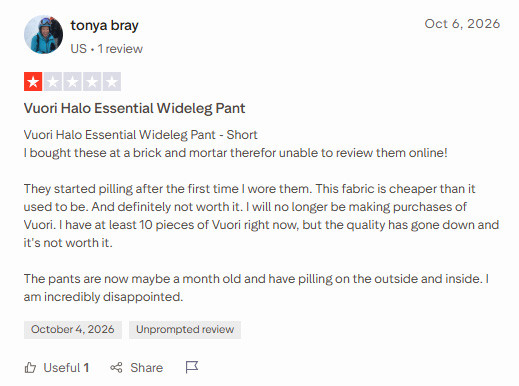
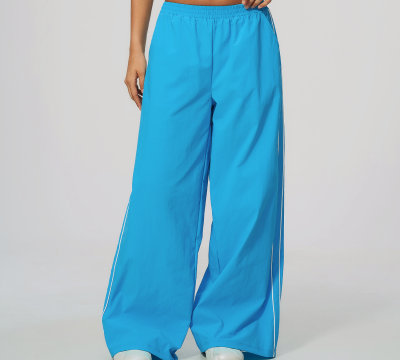
A recent customer review on the Vuori website highlights two closely related frustrations: the reviewer purchased a pair of wide-leg pants, and after roughly one month of wear, pilling appeared on both the outside and inside of the fabric; the reviewer also felt the material had become cheaper in feel, and the product no longer matched the quality they had come to expect from the brand. As a long-time customer with multiple existing purchases, this experience led to disappointment and a stated decision not to buy again. For DTC activewear brands, these comments point to two important development risks: premature fabric pilling that shortens the visible life of a garment, and a perceived drop in fabric quality that weakens the product’s value proposition.
Pilling cannot be judged from appearance alone, and a fabric specification on paper does not automatically guarantee the hand feel or durability customers expect. As a China-based activewear OEM & ODM manufacturer and supplier, AOLAFREE helps brand partners address these risks through careful fabric selection, specification alignment and pre-production sample review. Explore our OEM & ODM service or Send us your spec sheet for quotation to discuss how to reduce avoidable fabric-related complaints for your next pants collection.
Address Pilling Risk Through Fabric Review and Agreed Criteria
Pilling after only a short period of wear relates to more than a single factor. Fiber type, yarn construction, fabric density, surface characteristics and the friction a garment encounters during daily use all influence how readily pills form. For wide-leg pants, joggers and other frequently worn bottoms, these factors should be considered before a fabric is locked in for bulk production.
1. Check Fabric Construction and Surface Before Selection
Before selecting a fabric for leggings, joggers or wide-leg pants, we review more than its fiber composition. Yarn structure, knit or woven construction, fabric density and surface characteristics can all influence how the fabric responds to repeated friction. We also examine both the face and reverse sides of the fabric, particularly for garments where the inner surface comes into frequent contact with the skin or other clothing.
This helps identify fabrics with loose surface fibers or construction characteristics that may increase pilling risk before they are approved for production. When potential surface defects or loose fibers are identified, we recommend comparing alternative fabric options before selection. For brands with specific durability requirements, this initial review can be followed by agreed pilling tests to help determine whether the fabric meets the intended product requirements.
2. Define Pilling Resistance Requirements Before Bulk Production
For products with strict durability requirements, we recommend defining an acceptable pilling resistance level before bulk production. Depending on the fabric and buyer requirements, pilling performance can be evaluated through recognized methods such as ISO 12945-2 or ASTM D4970. The testing method, test conditions and acceptable rating should be agreed upon in advance, and the results can be reviewed against the buyer's requirements before fabric approval.
Testing reports should identify the test method, testing conditions and pilling rating so that results can be compared against the buyer's agreed requirements. Where supplier reports are unavailable or insufficient, third-party testing can be discussed before fabric approval.
3. Evaluate Pilling After Repeated Use or Washing
A fabric that looks smooth when new may still develop surface pills after repeated friction or washing. Standardized pilling tests provide a controlled way to evaluate fabric performance, while laundering or simulated wear evaluations can provide additional information about how the fabric surface changes during use. For selected development projects, these evaluations can be discussed according to the product's intended use and buyer requirements.
Maintain Consistent Fabric Quality and Perceived Value
The reviewer’s comment that the fabric “feels cheaper than it used to” reflects a second, subtler risk: customers compare each new purchase against their memory of previous products and the brand’s promised quality. A perceived drop in hand feel, thickness or finish can make a garment feel overpriced even when basic measurements still match the spec sheet.
Compare New Fabric Against an Approved Reference
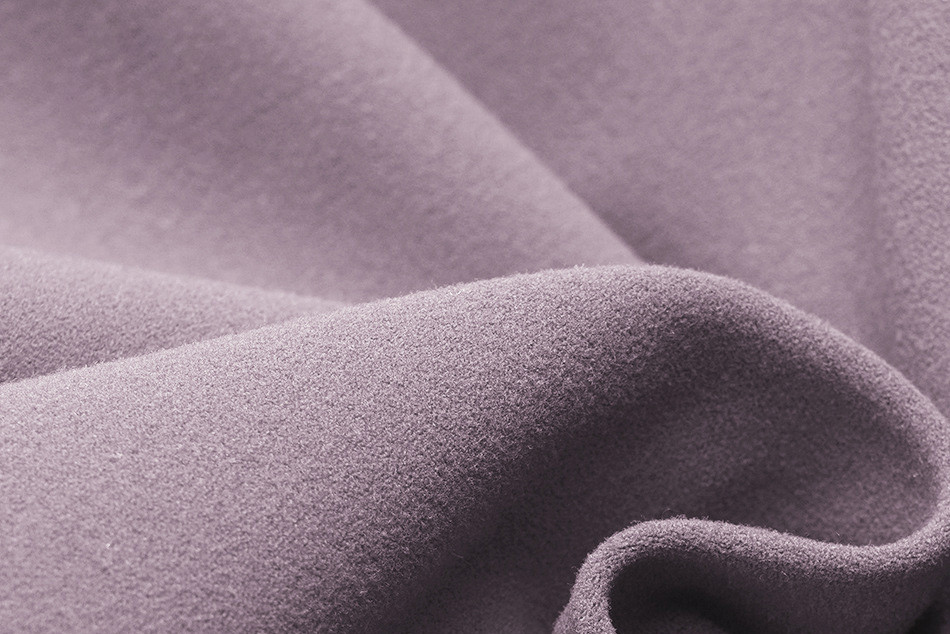
For brands updating an existing bestseller or reproducing a previous collection, an original garment or approved fabric swatch can serve as a practical reference. We can compare new fabric options against this reference for composition, GSM, stretch and recovery, surface texture, drape and hand feel. This helps identify material differences before a new fabric is approved, especially when the brand wants to maintain a familiar product experience across collections.
Control Fabric Changes Between Sampling and Bulk Production
Once a fabric has been approved, its key specifications should be recorded as the production reference. If a supplier proposes an alternative fabric or changes the original material, the replacement should be reviewed against the approved sample for composition, GSM, construction, stretch and recovery, surface appearance and hand feel. Any material substitution should be discussed and confirmed with the buyer before bulk cutting begins.
Common recorded reference points include the following:
- Fabric composition: for example, 75% Nylon / 25% Spandex
- Fabric weight: GSM and the agreed acceptable range for the order
- Fabric construction: knit or woven construction
- Stretch and recovery: agreed stretch and recovery requirements
- Hand feel: the hand feel confirmed by both sides
- Surface appearance: surface texture, luster and brushed or fuzzy finish
- Approved sample: the confirmed fabric swatch or finished garment sample
Don't Use GSM as the Only Measure of Fabric Quality
GSM alone is not a reliable indicator of fabric quality. A heavier fabric is not necessarily more durable, softer or more resistant to pilling. Fiber quality, yarn construction, fabric density, finishing and performance under friction all contribute to the final result. For this reason, fabric approval should consider both measurable specifications and actual fabric performance.
Additional Workmanship Checks
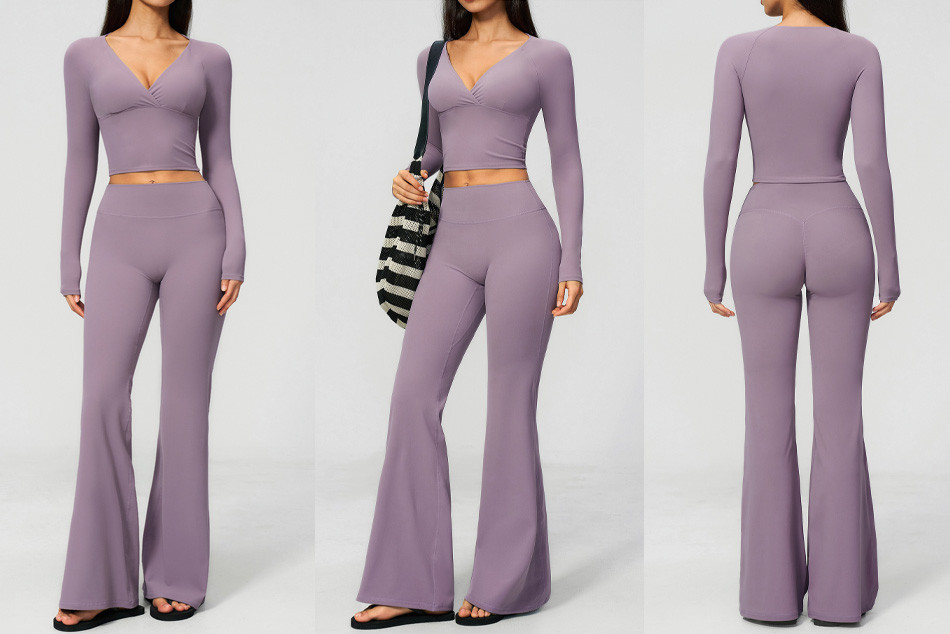
Although fabric performance is the main concern in this review, garment construction also contributes to perceived product quality. During production inspection, visible issues such as uneven seams, skipped stitches, loose threads and inconsistent finishing should be checked against the approved sample and workmanship requirements. This helps ensure that fabric improvements are supported by consistent garment finishing.
Quick Reference: Customer Concern, Inspection Focus & AOLAFREE's Practical Response
| Customer Concern / Related Production Risk | What Needs to Be Checked | AOLAFREE's Practical Response |
|---|---|---|
| Pilling on both sides after about one month of wear | Fiber composition, yarn construction, fabric density, surface characteristics and friction performance | Review both fabric surfaces, assess construction-related pilling risks and agree on testing requirements |
| Fabric feels cheaper than expected | GSM, composition, stretch and recovery, finishing, surface texture and hand feel | Compare fabric swatches against the approved reference and confirm key specifications |
| New fabric differs from the approved sample | Composition, GSM, construction, finishing and overall fabric performance | Record approved fabric specifications and review material substitutions before bulk cutting |
Sample Approval: Lock In Fabric and Construction Before Bulk
To reduce differences between the approved development sample and bulk production, we recommend completing the following checks before bulk cutting begins:
- Fabric specifications: Confirm fiber composition, GSM, construction and agreed stretch and recovery requirements.
- Fabric appearance and hand feel: Compare the selected fabric with the approved reference for surface texture, softness, drape and overall feel.
- Pilling requirements: Confirm the required pilling performance level and testing method where applicable.
- Garment sample: Review the finished sample to ensure the selected fabric works with the intended silhouette, fit and construction.
- Bulk material consistency: Record the approved fabric reference and confirm any proposed material substitutions with your team before bulk cutting.
Once approved, the pre-production sample, confirmed fabric specifications and agreed quality requirements serve as references for bulk production.
Build Reliable Activewear Collections With AOLAFREE, Your China Activewear Supplier
For activewear brands, fabric durability and perceived quality should be addressed before bulk production, not after customers report pilling or disappointment with hand feel.
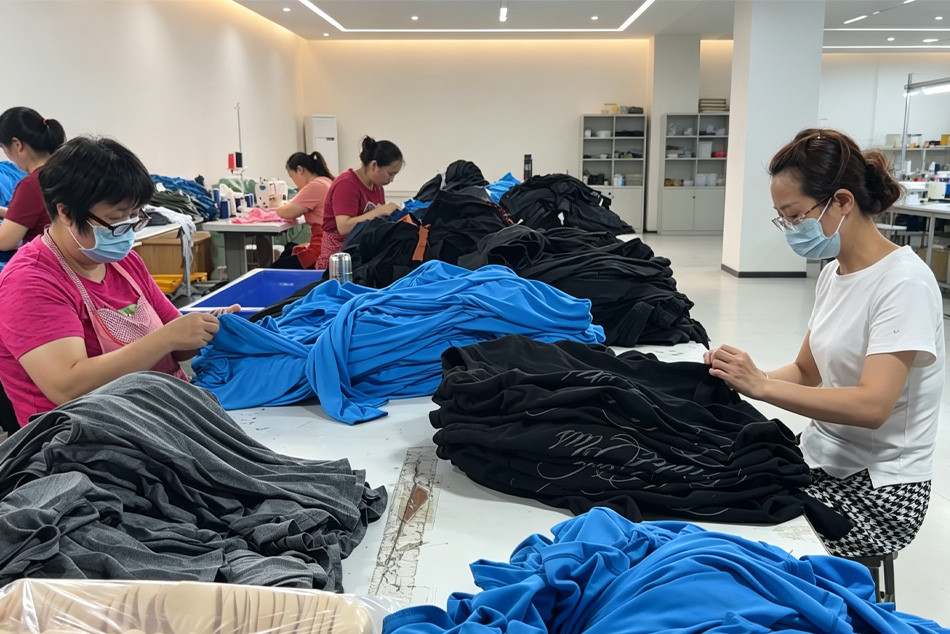
Whether you are developing wide-leg pants, joggers, leggings or casual activewear bottoms, AOLAFREE can work from your tech pack, existing fabric samples or target performance requirements to compare material options, confirm fabric specifications and review finished samples before bulk production.
By establishing clear fabric references and agreed performance criteria before manufacturing, your brand can reduce the risk of unexpected fabric differences and make more informed product development decisions.
Share your tech pack or reference sample with AOLAFREE to discuss your next activewear development project.