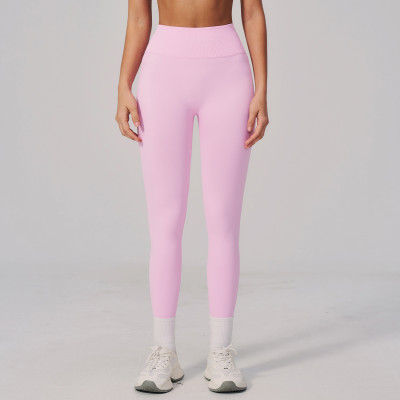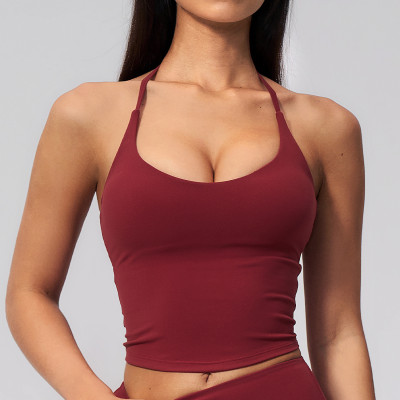

Nylon Spandex VS Polyester Spandex Yoga Fabric
Nylon-Spandex vs Polyester-Spandex Yoga Fabric: How to Choose?
Choosing between nylon-spandex and polyester-spandex is an important decision when developing yoga leggings, sports bras and other performance activewear. Both blends can deliver stretch, comfort and durability, but they differ in hand feel, moisture behavior, dyeing options and cost.
For activewear brands, the best fabric is not necessarily the softest or the most expensive one. It is the fabric that meets your customers' expectations, performs during the intended activity and fits your product positioning and production budget.
In this guide, we compare the two fabric families from a product development and sourcing perspective, explain common purchasing mistakes, and outline what to check before approving a fabric for bulk production.
1. What Is the Difference Between Nylon-Spandex and Polyester-Spandex?
Both fabrics combine a main synthetic fiber with elastane, also commonly called spandex in the United States. The nylon or polyester provides most of the fabric's base characteristics, while elastane contributes stretch and recovery.
However, fiber composition alone does not determine the final performance of a yoga garment. Yarn fineness, knitting structure, fabric weight, elastane quality, dyeing and finishing can all change how the fabric feels and behaves.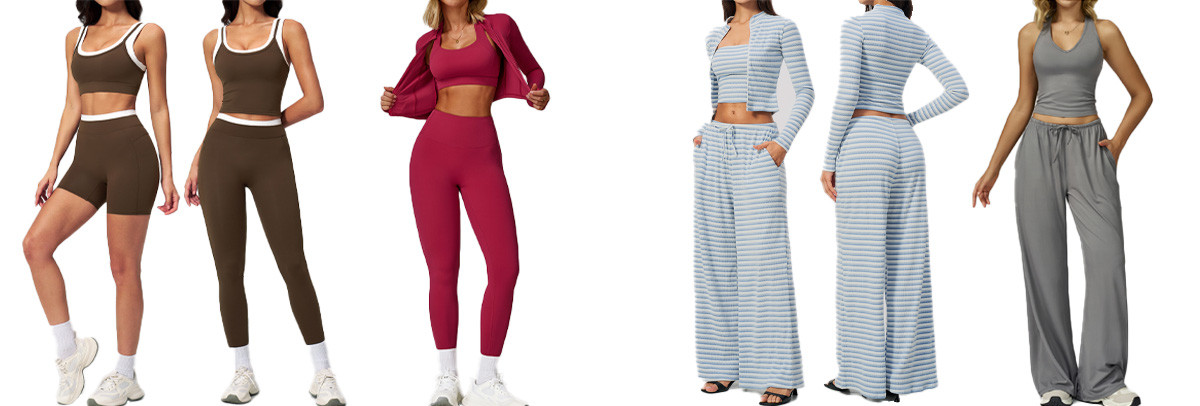
For a Smooth, Soft Hand Feel
Nylon-spandex is commonly selected for close-fitting yoga apparel that emphasizes a smooth surface, a soft touch and a comfortable next-to-skin feel.
- Often suitable for premium-feel yoga leggings and studio sets.
- Can provide good abrasion resistance when properly engineered.
- Works well for many solid-color collections.
For Versatile Performance and Cost Control
Polyester-spandex is widely used in training and performance apparel, especially when print compatibility, moisture management or production cost is important.
- A practical option for running, HIIT and printed activewear.
- Often dries faster at the fiber level than comparable nylon fabrics.
- Can support a broad range of product price points.
Important distinction: Neither blend is automatically superior. A well-engineered polyester-spandex fabric can outperform a poorly developed nylon-spandex fabric in a particular application. Always compare the actual fabric specifications and test results.
2. Nylon-Spandex vs Polyester-Spandex: A Side-by-Side Comparison
The following table summarizes common tendencies in activewear sourcing. These are starting points for fabric selection, not guaranteed performance results for every fabric.
| Comparison Factor | Nylon-Spandex | Polyester-Spandex | What Buyers Should Check |
|---|---|---|---|
| Hand feel | Often smooth, soft and suitable for a premium next-to-skin feel. | Ranges from crisp to very soft depending on yarn and finishing. | Compare physical swatches and finished garments. |
| Stretch and recovery | Can offer excellent stretch and recovery with the right knit and elastane system. | Can also deliver excellent stretch and recovery with suitable construction. | Test stretch, residual growth and recovery after repeated extension. |
| Squat-proof coverage | Can provide reliable coverage when opacity and construction are properly engineered. | Can also provide reliable coverage when correctly developed. | Test the actual garment under movement and stretch. |
| Moisture and drying | Generally absorbs more moisture into the fiber than polyester. | Generally has lower moisture absorption and can dry faster. | Evaluate wicking, drying time and garment comfort. |
| Pilling | Depends on yarn, knit structure, surface and finishing. | Also depends on yarn, knit structure, surface and finishing. | Request comparable pilling test results. |
| Color and printing | Commonly used for rich solid colors; dyeing methods differ from polyester. | Particularly suitable for polyester sublimation printing. | Confirm print method, shade consistency and colorfastness. |
| Durability | Often offers good abrasion resistance. | Often offers good resistance to sunlight and chlorine relative to nylon. | Test against the product's actual use and care requirements. |
| Cost direction | Often carries a higher fabric cost at comparable specifications. | Often offers a more economical starting point at comparable specifications. | Compare equivalent GSM, width, composition, finish and order volume. |
Note: Actual results vary with fabric construction, color, finishing, supplier specifications and testing conditions. Cost relationships are indicative rather than fixed market prices.
3. Hand Feel: Which Fabric Is Better for Premium Yoga Wear?
For yoga and Pilates apparel, hand feel is often one of the first qualities customers notice. A fabric that feels smooth against the skin can support a premium product experience, particularly in leggings, fitted tops and matching studio sets.
Why nylon-spandex is often selected
Fine nylon yarns combined with a suitable knit structure and finishing can create a smooth, soft surface. Brushed or peached finishes may further enhance softness, making nylon-spandex a useful starting point for collections positioned around comfort and a second-skin feel.
Can polyester-spandex feel premium?
Yes. Fine-denier polyester yarns and carefully controlled finishing can produce a soft, comfortable fabric. The difference between the two blends may be less obvious in some constructions than their fiber names suggest.
The important question is whether the finished material matches your brand's intended hand feel. Request samples of the actual fabric quality rather than relying on terms such as "buttery soft," "peach touch" or "premium stretch" in a supplier's product description.
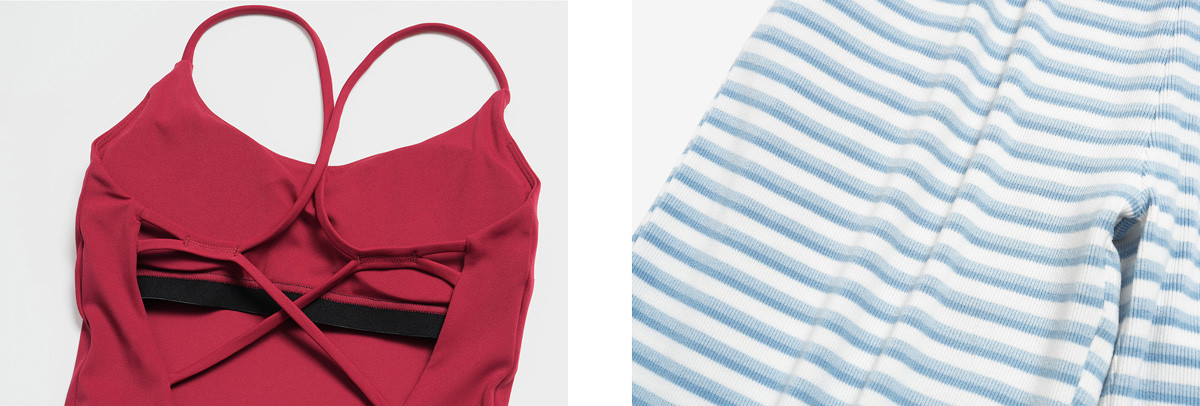
Product development tip: If softness is a core selling point, evaluate the fabric after washing as well as when it is new. A finish that feels excellent on the first touch may not deliver the same experience after repeated care cycles.
4. Stretch, Recovery and Squat-Proof Coverage
Stretch and opacity are two of the most important performance considerations for yoga leggings. However, a fabric's fiber composition cannot independently guarantee either property.
Stretch is not determined by spandex percentage alone
Elastane contributes elasticity, but the yarn system, knitting structure, fabric density and finishing all influence how a material stretches and returns toward its original dimensions.
When comparing two fabrics, ask for stretch and recovery measurements under the same test conditions. Check whether the material retains its shape after repeated extension, and evaluate the finished garment for waistband stability, knee bagging and overall fit.
What makes yoga leggings squat-proof?
Squat-proof coverage depends on several factors, including fabric weight, knit density, yarn structure, color, stretch under load and garment fit. A fabric that appears opaque when laid flat may become more transparent when stretched over the body.
Both nylon-spandex and polyester-spandex can be developed for opaque yoga leggings. Neither fiber family guarantees coverage simply because it is used in a particular composition.
- Evaluate the actual production-intended fabric in the selected color.
- Check opacity under realistic garment stretch, especially at the hips and seat.
- Test different sizes on fit models representing the intended size range.
- Review coverage under suitable lighting and during representative movements.
- Repeat checks if the fabric weight, color, finish or construction changes.
For brands selling in North America and Europe, documenting these checks during sample approval helps align product expectations before bulk manufacturing begins.
5. Pilling, Colorfastness and Performance After Washing
A fabric may look and feel excellent when new but change after repeated wear and laundering. For buyers developing long-term activewear collections, evaluating durability before production is more useful than assuming performance from fiber names.
Pilling: Why do some leggings develop surface fuzz?
Pilling occurs when fibers or yarn fragments form small balls on a fabric surface. Fiber type can influence the behavior, but yarn properties, knit structure, finishing, friction and care conditions also matter.
Neither nylon-spandex nor polyester-spandex is inherently pill-proof. Ask your supplier to test the specific fabric using an agreed method, such as ASTM D3512 or an applicable ISO 12945 method. Compare results only when the test method and conditions are comparable.
Colorfastness: Will the color fade or transfer?
Color performance depends on the fiber, dye selection, dyeing process, finishing and care conditions. Nylon and polyester typically use different dyeing systems, so test requirements should reflect the actual material and intended application.
For dark leggings, saturated colors and matching sets, buyers should consider colorfastness to washing, rubbing and perspiration. Light-colored garments and contrasting color combinations may also require particular attention to staining and color transfer.
What should be checked after washing?
- Changes in dimensions and overall fit.
- Loss of stretch or poor recovery.
- Surface pilling, fuzzing or changes in texture.
- Color fading, staining or transfer.
- Seam appearance, waistband stability and garment shape.
Where relevant, dimensional stability can be assessed using an applicable method such as ISO 5077, while colorfastness and pilling should be evaluated using methods agreed with the testing laboratory or buyer. The appropriate test and acceptance criteria depend on the product specification.
6. Which Fabric Is Better for Yoga, Pilates, HIIT and Running?
Instead of selecting fabric by trend alone, start with the product's intended activity and the qualities your customers value most.
Yoga and Pilates
Starting point: Nylon-spandex
A useful option for collections that emphasize a smooth hand feel, close-to-body comfort, flexible movement and a premium studio aesthetic.
Key checks: softness, coverage during stretching, recovery, waistband comfort and pilling.
HIIT and Gym Training
Starting point: Either blend
Polyester-spandex can suit cost-conscious training collections, while nylon-spandex can work well when a smoother feel or abrasion performance is a priority.
Key checks: stretch recovery, moisture management, seam strength and abrasion resistance.
Running and Outdoor Training
Starting point: Polyester-spandex
A practical option for many performance garments where quick drying, lightweight construction or outdoor exposure matters.
Key checks: drying performance, colorfastness, comfort during repetitive movement and fabric durability.
Printed Activewear
Starting point: Polyester-spandex
Polyester is generally the preferred substrate for sublimation printing, making it useful for all-over prints, colorful patterns and coordinated collections.
Key checks: print definition, color consistency, stretch performance and print durability.
These recommendations are starting points, not rigid rules. A yoga collection may use polyester-spandex successfully, and a training collection may benefit from nylon-spandex. The final decision should reflect the garment design, target market, required performance and approved sample.
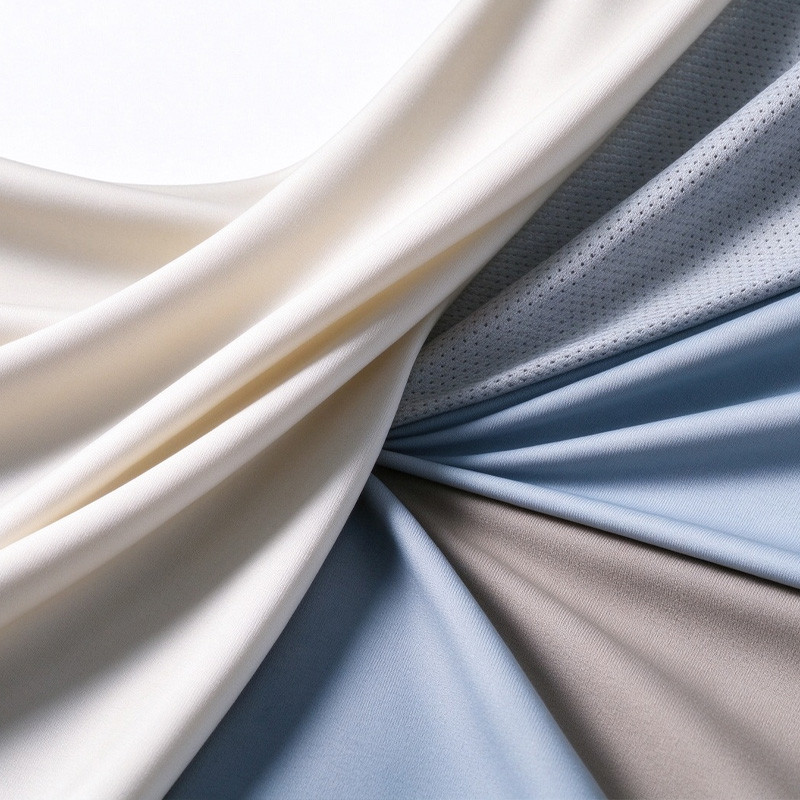
7. Cost Comparison: Is Nylon-Spandex Always More Expensive?
Nylon yarn often costs more than comparable polyester yarn, so nylon-spandex may have a higher fabric cost when the specifications are similar. However, the actual price depends on yarn quality, fiber ratio, fabric weight, knitting structure, finishing, color requirements and order quantity.
Comparing quotations based only on the words "nylon-spandex" and "polyester-spandex" can therefore be misleading. Two fabrics with the same nominal composition may differ significantly in construction and performance.
For a more meaningful comparison, request quotations based on the same or clearly documented specifications:
- Fiber composition: Confirm the actual percentage of nylon or polyester and elastane.
- Fabric weight: Compare GSM, rather than assuming all fabrics of a given composition are equivalent.
- Construction and finish: Specify the knit, surface treatment and other relevant details.
- Color and printing: Confirm whether the price includes dyeing, printing or special finishes.
- Testing requirements: Include any required performance tests in the development plan.
- Order quantity: Check whether the quoted price depends on color, style or production volume.
Budget recommendation: If your brand competes on a premium studio experience, investing in a suitable nylon-spandex fabric may support your positioning. If your priority is printed designs, quick-drying performance or tighter cost control, polyester-spandex may be a more practical starting point. The right choice is the one that meets your product requirements at a commercially sustainable cost.
8. Common Fabric Sourcing Mistakes Activewear Brands Should Avoid
Mistake 1: Assuming polyester-spandex cannot feel premium
Polyester fabrics vary widely in yarn fineness, knit structure and finishing. Some can feel smooth and soft enough for comfortable yoga apparel. Evaluate the actual material instead of rejecting it based on composition alone.
Mistake 2: Assuming nylon-spandex automatically guarantees a second-skin feel
Nylon is a useful starting point for soft, smooth fabrics, but the final hand feel still depends on yarn, knitting and finishing. A poorly selected nylon fabric may not meet your expectations.
Mistake 3: Approving squat-proof claims without testing the garment
A supplier's general fabric description is not proof that a finished pair of leggings will remain opaque when stretched. Test the actual fabric and garment in the intended colors and size range.
Mistake 4: Judging stretch by spandex percentage alone
A higher elastane percentage does not automatically mean better recovery, greater comfort or improved shape retention. The whole fabric construction must work together.
Mistake 5: Choosing the lowest quotation without comparing specifications
Differences in fabric weight, finishing, usable width and testing can make two quotations appear comparable when they are not. Align the specifications before making a purchasing decision.
Mistake 6: Skipping post-wash evaluation
Surface feel, color, dimensions and elasticity can change after laundering. Evaluate care performance before approving the final fabric for production, especially when these attributes are central to your brand promise.
9. How to Choose the Right Fabric for Your Private Label Collection
At the product development stage, fabric selection should connect your brand positioning with the garment's intended use and production requirements. A clear brief makes it easier for a manufacturing partner to recommend suitable options.
- Define the product: Identify whether you are developing yoga leggings, sports bras, training tops or a coordinated set.
- Prioritize customer expectations: Decide whether softness, coverage, moisture management, print appearance or cost is most important.
- Compare fabric samples: Review hand feel, stretch, recovery, weight, surface and color.
- Agree on performance checks: Establish the relevant test methods and acceptance criteria before bulk production.
- Approve the final specification: Confirm the fabric quality, color, finish and garment performance against the approved sample.
This approach helps reduce avoidable mismatches between product descriptions, customer expectations and the garment delivered.
10. How AOLAFREE Supports Custom Activewear Fabric Selection
For activewear brands, selecting a fabric is only one part of product development. The material must also work with the intended pattern, fit, construction, color palette and brand positioning.
AOLAFREE supports women's activewear OEM and ODM development, helping brands evaluate product requirements and align fabric selection with their intended collection. Depending on the project, development discussions can cover:
- Fabric direction: Comparing nylon-spandex and polyester-spandex options against the product brief.
- Fit and construction: Considering how stretch, fabric weight and garment design affect fit and coverage.
- Color and finish: Evaluating the intended appearance and surface feel of the finished product.
- Sample evaluation: Reviewing the physical sample before confirming production specifications.
- Private label details: Coordinating suitable branding, labels and packaging according to project requirements.
The recommended fabric depends on your target retail price, product positioning, required performance and order specifications. We recommend confirming the actual fabric quality and relevant test results before bulk production rather than relying on fiber names alone.
Develop the Right Fabric for Your Activewear Brand
Whether you are building a premium yoga collection, a versatile training range or a cost-conscious private label line, the right fabric starts with a clear product brief.
Share your product type, target market, preferred hand feel and budget range with AOLAFREE to discuss suitable fabric directions for your next collection.
Discuss Your Custom Activewear ProjectFrequently Asked Questions
Is nylon-spandex better than polyester-spandex for yoga leggings?
Nylon-spandex is often chosen for its smooth, soft hand feel, while polyester-spandex can be suitable when drying performance, print compatibility or cost is a priority. Both can work for yoga leggings if the fabric meets the required standards for stretch, recovery, opacity and durability.
Does a higher spandex percentage mean better stretch and recovery?
Not necessarily. Stretch and recovery also depend on elastane quality, yarn structure, knitting, finishing and the applied test conditions. Compare measured performance instead of using spandex percentage as the only indicator.
Which fabric is better for sublimation printing?
Polyester-spandex is generally the preferred choice for sublimation printing. If a collection uses nylon-spandex, confirm that the intended printing method is compatible with the material and the required color result.
Which fabric is less likely to pill after washing?
Neither fiber blend is guaranteed to resist pilling. Yarn quality, fabric construction, finishing, friction and care conditions all matter. Request test results for the actual fabric and evaluate it after appropriate laundering.
How can I make sure my leggings are squat-proof?
Test the production-intended fabric and finished garment under realistic stretch and lighting conditions. Review different sizes and colors, since coverage can vary with fabric extension, shade, fit and construction.
Can AOLAFREE help my brand choose between the two fabrics?
AOLAFREE can discuss fabric direction as part of women's activewear OEM and ODM development. Share your intended product, target market, performance requirements and budget so suitable fabric options can be evaluated for your project.
Technical References
The following standards and technical resources can help buyers establish a more objective fabric evaluation process. The appropriate method and acceptance criteria should be agreed with the testing laboratory and buyer for the specific product.
- ASTM D3512/D3512M — Pilling Resistance of Textile Fabrics: Reference for evaluating fabric pilling using a random tumble pilling tester.
- ISO 5077 — Determination of Dimensional Change in Washing and Drying: A relevant reference for dimensional stability evaluation; confirm the applicable edition and procedure.
- TÜV Rheinland — Textile and Apparel Testing: Technical information on textile testing, including colorfastness, abrasion, pilling and dimensional stability.
This article provides general fabric-selection guidance. It does not replace laboratory testing, supplier documentation or evaluation of the finished garment. Performance claims should be supported by evidence for the actual fabric and product.