
Women's Activewear Fabrics: A Data-Backed Guide to Choosing the Right Fabric
Every woman who has bought leggings online knows the pattern. The photo looks perfect, the reviews are glowing — and then the package arrives, and the fabric is thinner than it looked, the waistband rolls down by lunch, or the color fades into a washed-out version of itself after three laundry cycles.
None of this is bad luck. It is almost always a fabric problem — not a brand problem, not a design problem, and not a "you chose wrong" problem. Fabric determines more about how a garment performs than any other single factor: how it feels on skin, how it moves with the body, how it survives washing, and how long it stays wearable.
The stakes are higher than a single purchase. The global activewear market is projected to grow from USD 460.61 billion in 2025 to USD 487.86 billion in 2026, reaching USD 652.43 billion by 2031 at a 5.99% CAGR (Mordor Intelligence, Activewear Market Report 2026). With that much money moving through leggings, sports bras and training tops, fabric quality is not a detail — it is the product. This guide is written the way a manufacturer thinks about fabric, because understanding fabric from the inside out is the only reliable way to choose it from the outside in.
Part 1: Fabric 101 — What You Are Actually Touching
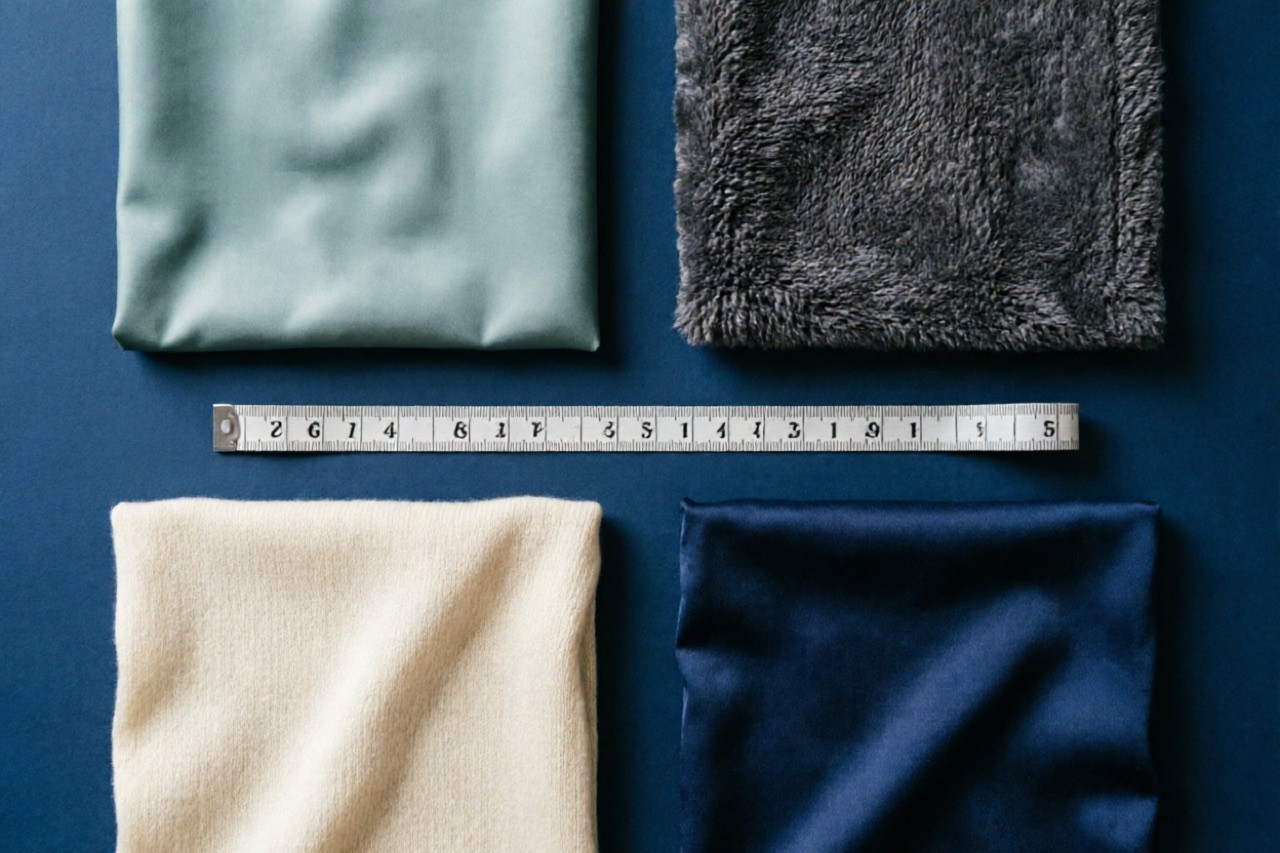
Before we get to specific fabrics, it helps to understand the two building blocks that make all activewear work.
Fibers: Natural vs. Synthetic
Every fabric starts as a fiber. Natural fibers — cotton, wool, modal — come from plants and animals. Synthetic fibers — nylon, polyester, spandex — are manufactured from polymers, with recycled versions now widely available.
Here is the honest summary of how they behave:
- Natural fibers breathe well and feel soft, but most absorb moisture and hold onto it. A cotton t-shirt soaks up sweat and stays wet against your skin.
- Synthetic fibers are hydrophobic — they repel water at the fiber level. That sounds counterintuitive, but it is exactly what makes moisture-wicking possible: the fibers do not absorb sweat, so moisture spreads across the fabric surface and evaporates quickly.
This single difference explains most design decisions in activewear. It is also why nearly all performance garments are synthetic blends, and why "100% cotton activewear" is a phrase that should make you ask questions.
Knit vs. Woven: Structure Matters as Much as Fiber
Beyond the fiber, there is the structure. Most activewear is knitted — yarns form interlocking loops, like a fine hand-knit sweater. Knits stretch, recover, and conform to the body. Woven fabrics (dress shirts, denim) have yarns crossing at right angles — stable and structured, but barely stretchable.
The rule: if a garment must move with you, it should be a knit. Yoga pants, sports bras, seamless tops — all knit. This is also why "woven" and "stretch" rarely appear in the same sentence, and why knit expertise is a core capability for any serious sportswear fabric manufacturer.
Part 2: The Stretch Story — Spandex, Elastane, and What "Four-Way Stretch" Means
If knit structure gives fabric flexibility, spandex gives it memory.
Spandex (also called elastane; Lycra is the best-known brand name) is a synthetic fiber that can stretch to roughly five times its relaxed length and snap back. It never appears alone — it is blended in small percentages with nylon, polyester or cotton to give them elasticity.
The percentage of spandex changes the garment's entire personality:
| Spandex content | Behavior | Best use |
|---|---|---|
| Under 10% | Gentle shaping, limited recovery | Lounge sets, cover-ups |
| 15–25% | Four-way stretch, strong recovery, light support | Quality leggings, bras, fitted tops — the performance zone |
| Over 30% | Heavy compression, dense and warm | Shaping garments, cold-weather compression |
Two more terms you will see on every label:
- Four-way stretch means the fabric stretches both lengthwise and widthwise — knits do this naturally. Two-way stretch only goes one direction, a red flag in a legging.
- Stretch recovery is the fabric's ability to return to its original shape after stretching. Poor recovery is why cheap leggings bag out at the knees by noon. There is a simple home test for this — see Part 8.
Part 3: The Fabrics, One by One
Now the main event — the fabrics you will actually meet in women's activewear, with their real strengths, weaknesses, and best uses.
Nylon (Polyamide): The Everyday Workhorse
Nylon is the most common base fiber in quality leggings and sports bras, for good reason: it is soft, strong, abrasion-resistant, and takes dye beautifully. It drapes well, feels smooth against the skin, and resists pilling better than most synthetics.
- Strengths: softness, durability, color depth, wear resistance
- Weaknesses: slower to dry than polyester, usually pricier
- Best for: leggings, fitted tops, sports bras, seamless pieces
A standard performance legging blend is roughly 75–80% nylon with 20–25% spandex. When "nylon" appears first on the label, it usually signals a garment that prioritizes feel and longevity — which is why brands sourcing custom leggings production specify nylon content carefully.
Polyester: The Quick-Dry Specialist
Polyester is the other dominant synthetic. Its superpower is drying speed and colorfastness — it holds dye so well that bright, saturated colors are almost always polyester or polyester-heavy blends.
- Strengths: fast drying, excellent color retention, low cost, easy care
- Weaknesses: less soft than nylon, can hold onto body odor, lower abrasion resistance over time
- Best for: running tops, outer layers, high-intensity wear, bright prints
The odor issue deserves a fair mention. Polyester's hydrophobic fibers don't absorb sweat — great for drying — but bacteria can build up in the fiber structure, and that is where the smell comes from. Modern treatments (silver, zinc, or antimicrobial finishes) help, and so does washing performance pieces promptly after use. If odor resistance is a priority, look for treated polyester or a nylon-dominant blend.
Spandex / Elastane: The Stretch That Holds It Together
Covered in Part 2, but worth one line here: spandex is never the star of the label, yet it is the reason the garment works. Check the percentage — it is the single most informative number on a leggings label.
Cotton: Honest About Its Limits
Cotton is the fabric most women know best, and its reputation for comfort is earned — but its reputation in activewear is complicated.
- Strengths: softness, breathability, natural feel, gentle on most skin
- Weaknesses: absorbs sweat and stays wet, heavy when damp, slow to dry, loses shape without spandex
- Best for: gentle yoga, warm-up layers, lifestyle wear, loungewear
This is why "cotton blend" activewear exists: a cotton-nylon-spandex mix (often around 60/30/10) keeps the soft hand-feel while adding wicking and recovery. For a slow flow class or a lazy Sunday, a cotton-blend set is genuinely lovely. For a 45-minute HIIT session, it will feel like a wet towel by minute ten.
Modal, Lyocell (TENCEL) and Bamboo: The Soft-Alternative Family
These semi-synthetic fibers are made from wood pulp (bamboo viscose is a related process). They are marketed heavily for buttery softness and an eco-friendly story — and both claims have real substance. Lyocell, in particular, uses a closed-loop manufacturing process that is genuinely more sustainable than conventional rayon.
- Strengths: exceptional softness, breathability, comfortable moisture absorption, biodegradable
- Weaknesses: less durable than nylon, can lose shape without spandex, wrinkles
- Best for: loungewear, sleepwear, light yoga, lifestyle sets
The honest guidance: modal and lyocell are wonderful *comfort* fabrics and average *performance* fabrics. For the fastest-growing segment of the market — women buying versatile activewear that works at home and in public — they are an increasingly popular choice, which is why custom loungewear programs have grown alongside performance lines.
Merino Wool: The Overachieving Natural
Merino wool is the exception to everything said about natural fibers. Its fibers are so fine they bend instead of itch, and it manages moisture remarkably well — absorbing sweat vapor and releasing it as the garment warms.
- Strengths: temperature regulation, odor resistance, moisture management, works in heat and cold
- Weaknesses: expensive, delicate, needs special care
- Best for: base layers, travel, outdoor training
Brushed Fleece and French Terry: The Comfort Zone
When a legging has a soft, fuzzy interior, it is brushed fleece — the knit is brushed on one side to raise soft fibers that trap warm air. French terry is the looped-back cousin (think premium sweatpants).
- Strengths: warmth, softness, cozy comfort
- Weaknesses: heavier, less breathable — wrong choice for hot yoga
- Best for: winter outdoor sessions, recovery days, travel, lounging
Mesh and Power Mesh: The Ventilation Specialists
Mesh is an open knit that lets air and moisture escape; power mesh is a firmer version used in panels for support and shaping. You will find mesh panels on running tops, sports bras, and leggings' calves and back-of-knee — placed deliberately where the body vents the most heat.
Recycled Fabrics: Performance With a Story
Recycled polyester (rPET, made from plastic bottles) and recycled nylon now appear throughout the market. The honest trade-off: recycled synthetics are slightly less consistent in dyeing and can be marginally less durable in high-stress garments, but the technology has improved enormously. In a market where sustainability claims increasingly drive purchasing — and where fashion accounts for an estimated 10% of global carbon emissions (UNEP and Ellen MacArthur Foundation estimates) — recycled content is a meaningful differentiator. Look for GRS (Global Recycled Standard) certification if it matters to you.
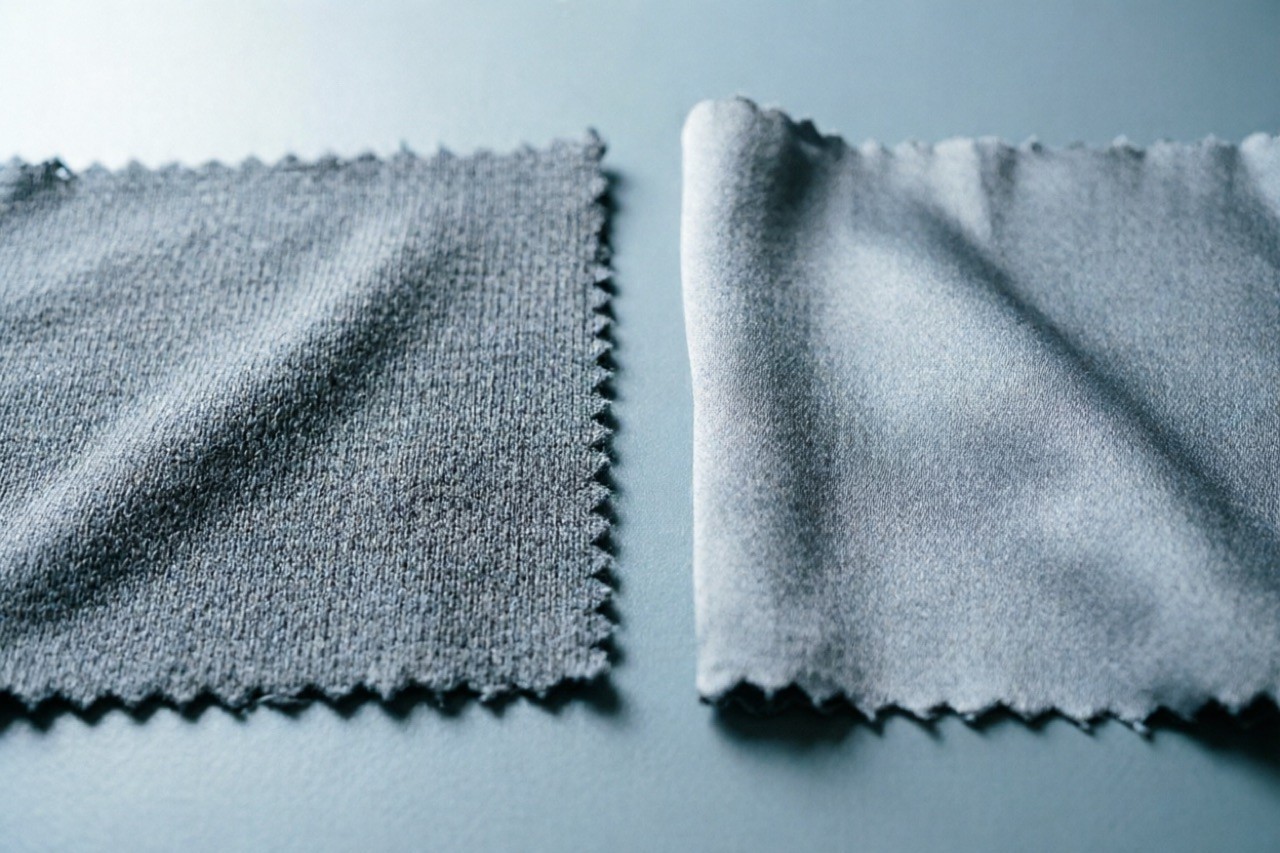
Part 4: Blends and Ratios — What the Numbers on the Label Really Mean
Fabric labels list percentages, and those percentages are a decision. Here is a practical translation table:
| Blend | Feel | Best for |
|---|---|---|
| 75–80% nylon / 20–25% spandex | Soft, smooth, supportive, great recovery | Leggings, bras, fitted tops |
| 75–80% polyester / 20–25% spandex | Quick-dry, color-rich, slightly firmer | Running wear, bright prints |
| 90–95% nylon / 5–10% spandex | Light, drapey, gentle shape | Lifestyle pieces, cover-ups |
| 60% cotton / 30% nylon / 10% spandex | Soft, breathable, moderate performance | Gentle practice, lounge |
| 50% polyester / 50% cotton | Casual, comfortable, low-performance | Rest days, errands |
| 100% polyester | Wicking, quick-dry, no stretch | Outer shells, running tops |
One more label-literacy tip: percentage and weight tell you different things. Percentage is about fiber composition; GSM is about density. You need both to predict how a garment behaves — and both are specified on every fabric spec sheet in a professional sportswear factory before a single yard is cut.
Part 5: GSM — The Density Number That Predicts Everything
GSM stands for grams per square meter. It tells you how dense and heavy the fabric is, and it is the fastest predictor of whether leggings will pass the squat test.
| GSM range | Character | Typical use |
|---|---|---|
| 150–180 | Whisper-thin, breathable | Summer tops; risky for leggings |
| 180–200 | Light-to-mid weight | Warm weather, low-to-moderate intensity |
| 200–240 | The squat-proof zone | Most quality leggings — opaque, supportive, flexible |
| 240–280 | Serious compression and warmth | Winter, shaping wear |
| 280+ | Sculpting territory | Shaping shorts, cold-weather compression |
If a product page does not list GSM, estimate it: hold the fabric up to a light source. The more light that comes through, the lower the GSM — and the higher your risk of a see-through failure in the squat test.
Part 6: Construction — The 50% of Quality Nobody Photographs
Fabric is half the garment; construction is the other half. The same fabric can be ruined or elevated by how it is sewn.
- Flatlock seams — the flat, ribbed seams on quality activewear — lie flat against the skin instead of digging into it. They are slower to sew than standard seams, which is why they are a quality marker.
- Coverstitch hems — the double-needle stitching on a legging's hem — stretch with the fabric. A regular straight stitch pops when stretched.
- The gusset — the diamond-shaped panel at the crotch — is engineering, not a luxury. It adds freedom of movement, reduces fabric stress, and extends garment life.
- Waistbands come in several constructions: folded-over, wide flat, seamless bonded, and drawcord. A wide, flat, seamless band generally stays put best under movement.
- Bonded hems and laser-cut edges (no stitching at all, common in premium seamless wear) remove threads that chafe, at a slightly higher price.
Rule of thumb: if the seams are rough, the hem does not stretch, or a tight legging has no gusset, the fabric quality almost does not matter — the garment will fail you anyway.
Part 7: Treatments and Finishes — What "Moisture-Wicking" Actually Means
"Moisture-wicking" is the most abused word in activewear marketing. Here is the actual mechanism: wicking fabrics move moisture from your skin to the fabric's outer surface, where it evaporates. They do this through capillary action — the spaces between hydrophobic synthetic fibers act like tiny channels, pulling sweat along the surface. Your skin stays drier; the garment dries faster.
Other treatments you will see:
- Anti-odor treatments — silver ions, zinc, or antimicrobial finishes that slow bacteria growth. Effective, but they fade with washing; proper care extends them.
- UPF ratings — a tight synthetic knit with UPF 50+ blocks over 97% of UV. This is a real, testable number; look for it on outdoor pieces.
- Recycled content — polyester or nylon made from recycled materials, usually with GRS or similar certification.
- DWR (durable water repellent) — a finish that makes the outer surface bead water; PFC-free versions are now standard in better brands.
Part 8: The Six-Point At-Home Test (Before You Buy — or Right After)
You do not need a lab to evaluate activewear. Six tests, two minutes:
- The stretch-and-snap test. Pull the fabric sideways and lengthwise. It should stretch easily and snap back immediately. Slow, loose recovery = sagging within weeks.
- The opacity test. In bright light, pull the fabric taut over your hand — or wear it and squat in front of a mirror. If you can clearly see skin, the GSM is too low for the color.
- The hand-feel test. Quality nylon or treated polyester feels smooth, almost creamy. A waxy, papery, or plastic feel is a bad sign.
- The seam check. Flatlock seams, stretchy hems, and a gusset in tight bottoms. Run a finger along every seam — anything that catches your skin will chafe in motion.
- The water test. Drip water on the fabric. Quality wicking fabric absorbs and spreads it quickly rather than beading and pooling.
- The label test. Check the spandex percentage and the care instructions. "Dry clean only" on a performance piece is a red flag.
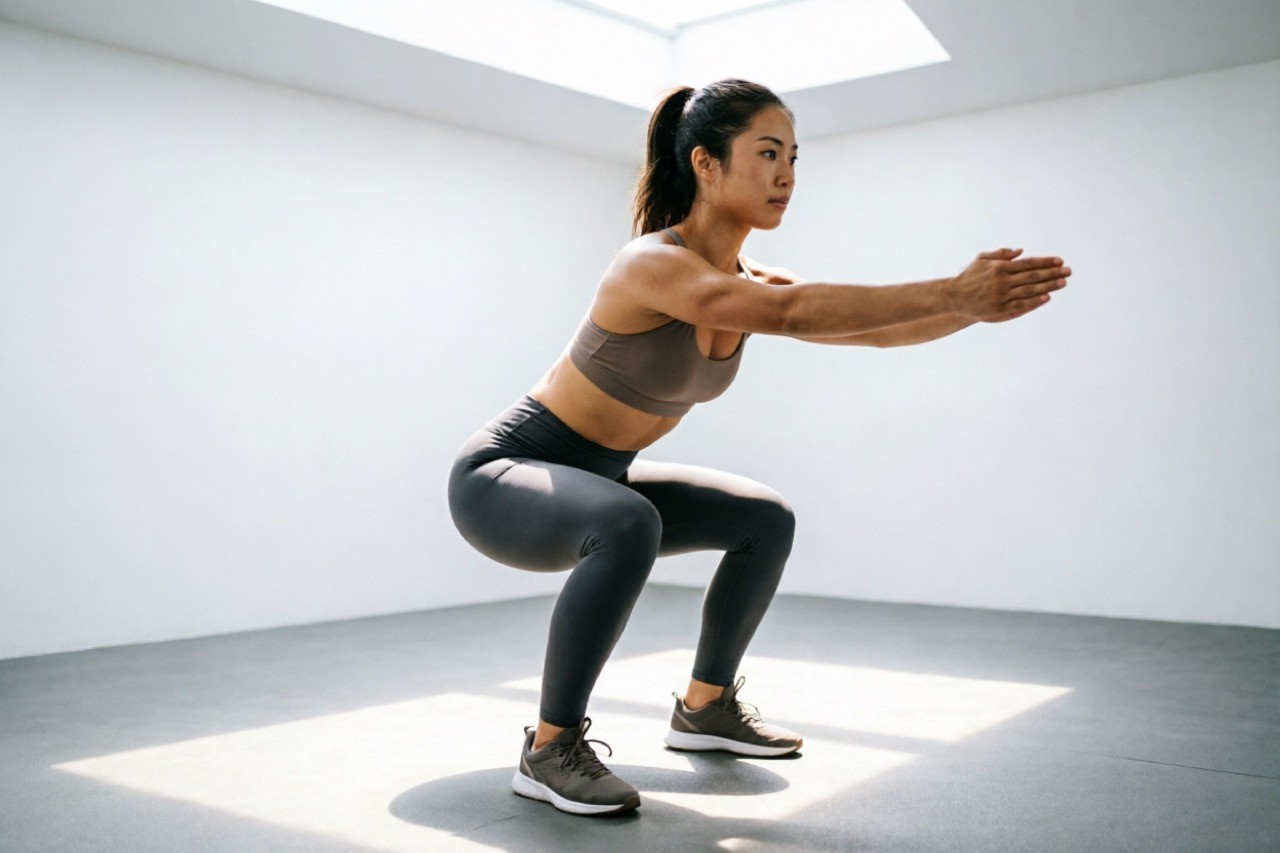
Part 9: Choosing by Activity and Climate — The Quick-Reference Matrix
Different movements demand different fabrics:
| Activity | Fabric priority | Suggested blend | GSM |
|---|---|---|---|
| Yoga (flow/hatha) | Stretch, softness, no pinching | Nylon/spandex 75/25 | 200–240 |
| Hot yoga | Wicking, lightweight | Polyester/spandex, mesh panels | 180–220 |
| Pilates | Recovery, grip, coverage | Nylon/spandex, high waist | 200–240 |
| Running | Wicking, light, reflective | Polyester blends, mesh | 150–200 |
| HIIT / strength | Compression, durability | Nylon/spandex, thicker | 220–260 |
| Winter outdoor | Warmth, layering | Brushed fleece, merino base | 240+ |
| Loungewear / recovery | Softness, comfort | Modal, cotton blends, terry | any |
Climate rules are simpler: hot and humid favors lightweight synthetics and mesh; cold and dry favors brushed fleece and merino layers; cold and wet demands synthetic or merino base layers (never cotton) under a water-repellent shell. And in between-seasons, the magic is layering — a wicking base under a knit mid-layer you can peel off.
Part 10: Color, Dye, and Opacity — The Visual Side of Fabric
Color quality is a fabric story, not a design story.
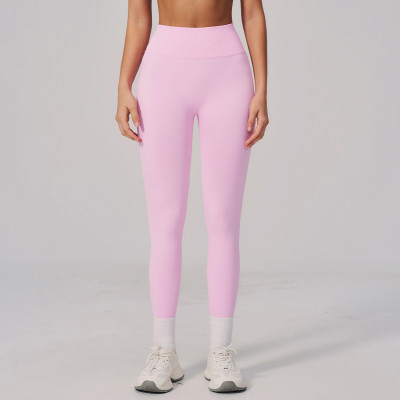
Light colors are unforgiving. A white or pastel legging made of mid-weight fabric can look perfectly opaque in a product photo and fail completely in real light. If you love light colors, buy higher GSM, or test before you buy.
Dye quality determines lifespan. Cheap dye bleeds, fades, and transfers onto lighter clothes and furniture. Signs of good dye: rich, even color; no dye smell; no color transfer when you rub the fabric with a damp white cloth. Nylon-dominant fabrics generally hold dye deeper and longer than polyester — one more reason premium brands favor them.
Part 11: Care — Where Most Activewear Goes to Die
The washing machine is the #1 killer of performance fabrics. Not exercise. Not sun. The machine.
- Wash cold (30°C or below), inside out, gentle cycle. Heat is the enemy of spandex and finishes.
- Never use fabric softener. It coats the fibers, blocks moisture-wicking, and degrades elasticity.
- Air dry. Tumble drying on high heat destroys stretch recovery faster than anything else. If you must machine-dry, use the lowest heat.
- Wash after each intense session. Bacteria buildup is the real source of "permanent" odor in polyester.
- Zip up and turn inside out to protect prints and prevent pilling.
- Avoid chlorine and salt water, then rinse immediately if exposed.
- Deodorize occasionally: a cold soak with a splash of white vinegar, or a dedicated sports detergent, revives smelly pieces.
- Store flat or folded, never stretched on hangers — hanging leggings by the waistband stretches them out over time.
Part 12: When to Replace Activewear
No garment lasts forever. Replace a piece when you notice any of these:
- Fabric feels loose or baggy even after washing (elastic fatigue)
- Knees, thighs, or waistband have permanently lost shape
- Light is visible through previously opaque fabric
- Seams are fraying or flatlock seams have popped
- Odor no longer washes out
- The waistband rolls or digs regardless of fit
Depending on frequency of use, a quality legging lasts roughly 1–2 years of regular wear. That is normal — and it is exactly why buying better fabric up front is cheaper than replacing cheap fabric twice as often. For brands, this math is the core of repeat business: a garment that survives 100 wears earns a customer; one that dies at 20 loses one.
Part 13: Five Myths About Activewear Fabric, Busted
Myth 1: "More spandex = better." Over 30%, and you get heavy, sweaty compression that loses breathability. The sweet spot for most wear is 15–25%.
Myth 2: "Cotton is breathable, so cotton activewear is breathable." Cotton absorbs sweat and holds it — the opposite of what performance wear needs. Breathable means *moisture moves through*, not *moisture gets trapped*.
Myth 3: "Fabric softener makes activewear softer." It makes it softer for exactly one wash, then destroys the wicking and elasticity that made the garment worth buying.
Myth 4: "Expensive = performance." Price reflects branding and margins as much as material. A $20 legging with 22% spandex, 220 GSM, and flatlock seams can outperform a $90 one with 8% spandex.
Myth 5: "Seamless = better." Seamless construction is great for comfort, but seamed garments with a gusset are often more durable and supportive. Each has its place.
Part 14: FAQ
Q: What is the best fabric for everyday leggings? A: Nylon-spandex around 75/25 at 200–240 GSM. It balances softness, recovery, and opacity — the combination most women actually wear day to day.
Q: Why do my leggings smell even after washing? A: Usually bacteria in polyester fibers. Wash promptly, skip fabric softener, and occasionally soak in cold water with white vinegar or a sports detergent.
Q: Are bamboo fabrics as good as advertised? A: Bamboo viscose is soft and comfortable but performs like modal — great for comfort, average for intense training. "Bamboo" alone does not equal performance.
Q: What does "squat-proof" actually mean? A: It means the fabric stays opaque when stretched over the body. It is a function of GSM, fiber, color, and construction — not a magical property.
Q: Should I size up if the fabric feels tight? A: Sometimes. But first check whether the fabric has poor recovery. Quality fabric that feels snug will relax into a perfect fit; cheap fabric will bag out.
Q: Is recycled fabric worse? A: Slightly less consistent in dyeing, but modern recycled synthetics perform very close to virgin materials. The durability difference in most garments is minor.
Q: How do I fix pilling? A: A fabric shaver removes pills; washing inside out and air drying prevents them. Pilling in high-friction areas is normal wear, not a defect.
Q: Can I wear merino for hot yoga? A: Merino regulates temperature well but tends to be too warm for intense indoor sessions. Save it for outdoor and travel.
Talk to the Fabric Team Behind the Fabrics
There is no single "best" fabric — only the right fabric for what you are doing, worn with the right care. Learn to read the label, understand the GSM, run the six tests, and treat your gear gently in the wash. That knowledge turns fabric from a gamble into a predictable decision.
And if you are building your own brand, this is where working with a manufacturer who thinks about fabric first changes everything. AOLAFREE's fabric team selects and tests materials against real movement patterns — yoga, pilates, running, daily wear — before production begins, across the aola collection and every custom OEM/ODM program. The custom fabric blog series and the fabric sourcing hub walk through the details in depth.
Ready to spec your next collection? Tell us your product type, target market, and budget — we will recommend fabric compositions, GSM ranges, and finishes that fit your price point, then send samples for your team to test. Request a fabric consultation or sample, check our MOQ and pricing, or read our sample policy to see how testing works before you commit. Our team typically responds within one business day.