
Yoga Leggings vs Running Compression Tights: Support & Cut Comparison
Many sportswear buyers, brand owners and fitness retailers frequently confuse yoga leggings and running compression tights. They often assume that all tight athletic pants are interchangeable, only to receive complaints from end customers about slipping waistbands, painful chafing, insufficient muscle support or restricted movement. The core distinction comes down to their original design goals: yoga apparel prioritizes unrestricted, full-range stretching for bending, twisting and holding poses, while running compression tights are built with gradient pressure technology to stabilize muscles, reduce oscillation and delay fatigue during repetitive high-impact strides. As a professional Aolafree China sportswear supplier specializing in OEM and ODM fitness apparel, we have tested hundreds of fabric blends and pattern versions. Below we break down waistband, crotch, side seam and leg opening tailoring details, share real test results for breathability, anti-chafing performance and bounce control. We also discuss whether one single pair can serve multiple sports scenarios and provide a practical buyer selection checklist to help you match the right styles for your product line quickly.
1. Core Design Logic Difference: Freedom of Extension vs Gradient Compression
Yoga leggings are engineered around 4-way stretch performance. The primary goal is to remove limitations during deep forward folds, backbends, lunges and twisted poses. The fabric needs to stretch evenly in all directions without digging into the skin, and it should recover smoothly after each stretch to avoid permanent sagging. Pressure distribution is soft and uniform across the whole leg, with no targeted squeezing on specific muscle groups. Comfort and unobstructed mobility always come first.
Running compression tights follow a completely different principle: gradient compression. Pressure is calibrated to be higher around the calves, gradually decreasing upwards toward the thighs and hips. This engineered pressure gradient helps boost venous return, reduce muscle shake and absorb repeated impact from foot strikes. The fabric is stiffer and has stronger targeted restraint, not for unlimited stretching, but for keeping leg muscles aligned and stable mile after mile. As an experienced Aolafree sportswear manufacturer in China, we adjust the spandex ratio, stitch density and panel layout separately for yoga series and running compression series to match these opposing functional needs.
2. Tailoring Differences: Waistband, Crotch, Side Seam & Leg Opening
Waistband Design
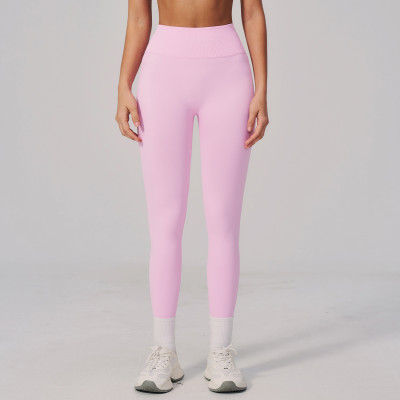
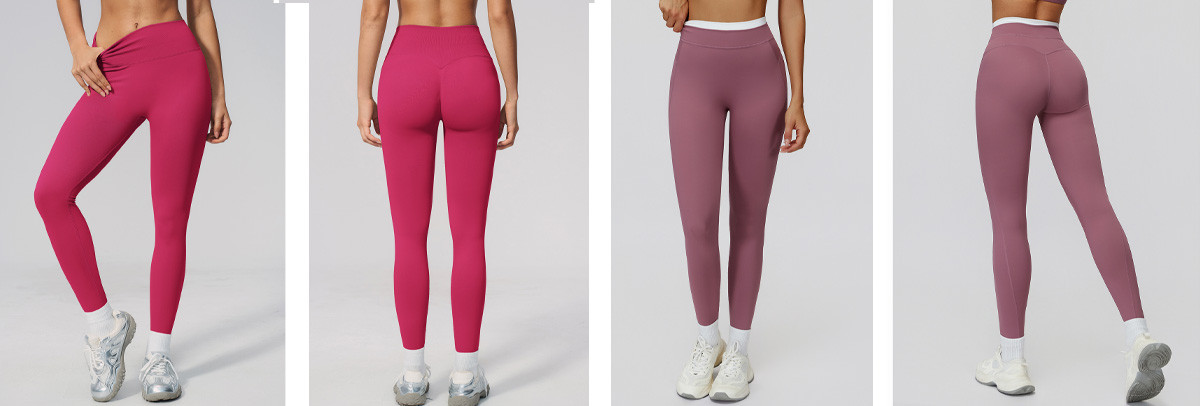
Most premium yoga leggings adopt a wide, high-rise waistband, often with hidden silicone grip lining. The wide surface spreads pressure evenly on the midsection, and the anti-slip lining prevents rolling down when practitioners fold forward or invert. The waistband is elastic but gentle, designed to avoid squeezing the abdomen during deep breathing. For running compression tights, waistbands are reinforced with thicker elastic tape. Runners bounce up and down continuously, so the waistband needs stronger locking power. Many running styles also add drawcords for adjustable tightness, a feature rarely seen on standard yoga leggings.
Crotch & Side Seam Construction
Yoga pants commonly use a diamond-shaped gusset crotch and seamless or bonded side seams. The gusset eliminates tension points when legs spread wide, and seamless construction removes seam irritation during long static holds. Running compression tights use flatlock stitching and reinforced multi-layer crotch panels. Flatlock seams lie flat against the skin and resist friction during thousands of repeated strides. The thicker crotch fabric handles sustained rubbing on inner thighs that happens during long-distance jogging, marathon training and trail running.
Leg Opening Cut
Yoga legging hems are usually straight or slightly relaxed, with minimal compression at the ankle. The priority is comfort when the foot is flexed, curled or placed under the body. Running compression tights feature snug, tightly fitted leg cuffs. These cuffs lock in the gradient pressure at the lowest point of the leg, prevent the fabric from creeping upward and maintain consistent compression on calves throughout the run.
3. Real Wear Test: Breathability, Anti-Chafing & Bounce Control
Our in-house testing team simulates real user scenarios to compare these two categories, focusing on three pain points that end shoppers care most about.
- Breathability & Moisture Wicking: Yoga leggings focus on steady moisture transfer for low-to-moderate sweating during static flows. Many yoga fabrics prioritize soft hand feel above maximum airflow. Running compression fabrics integrate targeted vent panels on thighs and calves. High-output running generates heavy, rapid sweating, so these panels accelerate hot air escape and cut down sticky wet fabric against skin.
- Anti-Chafing Performance: Seamless yoga construction works very well for low-impact movement. However, it is not built for continuous repeated friction. Running compression tights add dedicated anti-rub panels on inner thighs, using smoother, low-friction fabric blends to reduce hot spots and blisters during long runs.
- Bounce & Muscle Vibration Control: This is the biggest performance gap. Compression tights actively restrain muscle oscillation to reduce fatigue and soreness. Standard yoga leggings offer very little shock control. If you wear ordinary yoga leggings for fast running, leg muscles will vibrate freely, leading to quicker tiredness and higher risk of delayed soreness.
4. Can One Pair Be Worn for Both Sports? Which Styles Support Dual Use?
Standard full-stretch yoga leggings cannot replace professional running compression tights. They lack the carefully calibrated gradient pressure structure, and their waist and hem design cannot handle high-impact bouncing. Likewise, heavy compression running tights will feel restrictive and stiff during deep yoga poses, limiting twists and wide leg openings.
That said, dual-purpose hybrid sportswear does exist. The hybrid styles from Aolafree China sportswear manufacturer strike a careful balance: moderate 4-way stretch paired with mild, uniform compression rather than strong gradient pressure. This middle specification works perfectly for low-speed jogging, walking, gym training and gentle yoga flows. Hybrid pants are a popular SKU for brands targeting casual fitness consumers who want fewer garments for multiple daily workouts. Still, they are not a replacement for specialized compression gear for serious runners or advanced yoga practitioners.
5. Buyer Selection Checklist for Quick Product Matching
- Pure yoga product line: Prioritize high 4-way stretch, seamless or bonded seams, high-rise wide waistband, gusset crotch, soft hand feel, no heavy compression
- Road running & marathon line: Choose gradient compression mapping, flatlock anti-chafe seams, reinforced waistband with optional drawcord, tight ankle cuffs, ventilated panels
- Multi-scene hybrid line: Select mid-compression fabric, balanced elasticity, versatile waist design, suitable for yoga, brisk jogging and gym strength training
- Custom OEM orders: Contact our team to customize fabric spandex ratio, pressure mapping, waist height, seam type, color palette and add branding prints or logos
Understanding these functional differences helps you avoid mismatched inventory and reduce customer returns. Many new fitness apparel brands underestimate how much pattern and pressure mapping impact end-user satisfaction. Partnering with a manufacturer that understands both yoga and running technical requirements helps you build a more targeted product portfolio.