
Custom Tank Top Manufacturing: The Complete Guide to Gym Tanks, Dri-Fit Tops & Racerback Styles
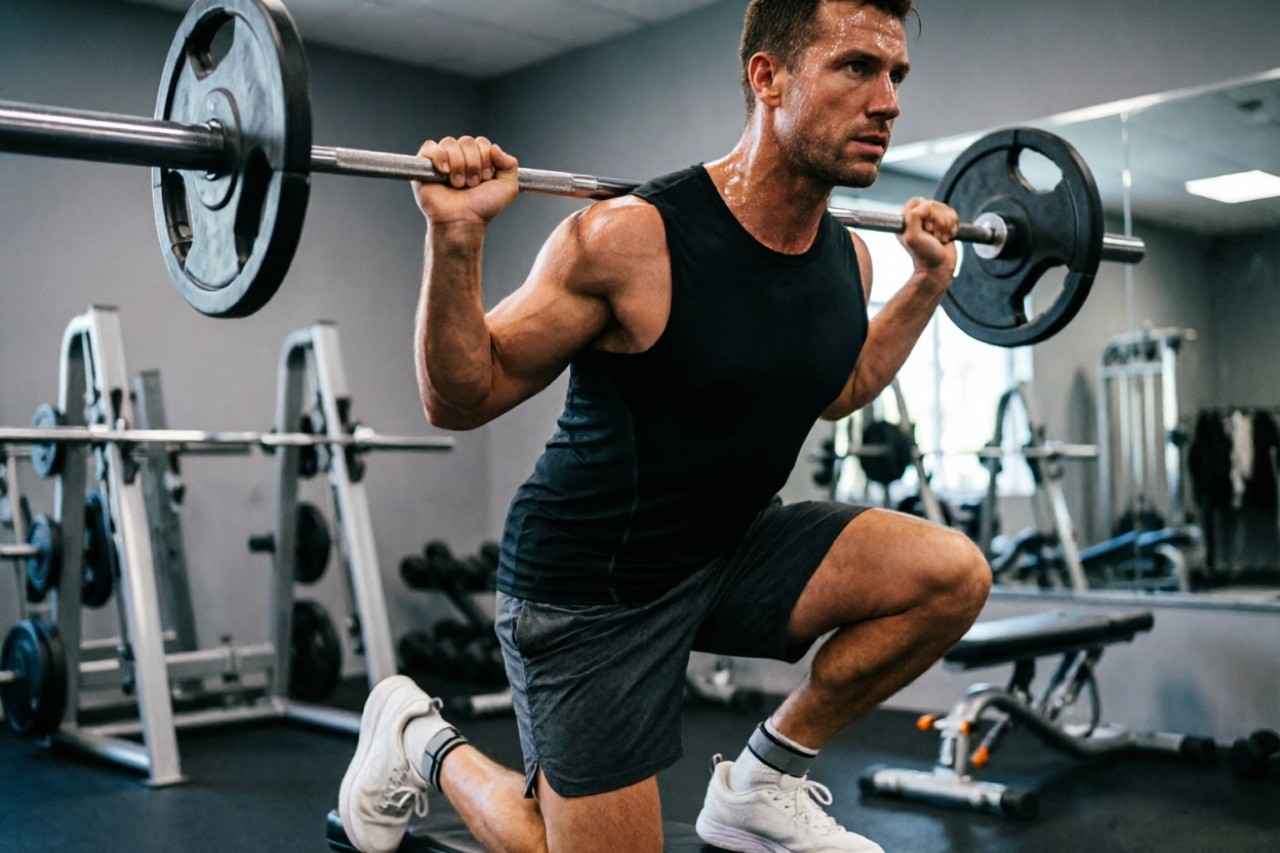
The tank top is the most underrated product in the entire activewear category. It is not the hero item — leggings and sports bras get the marketing budgets. But walk through any gym in any country and the tank top is the garment you see most: on the squat rack, on the treadmill, on the rowing machine, layered under hoodies, worn to brunch after training.
For brands, that ubiquity translates into something better than hype: repeat volume. Tank tops are priced affordably, worn constantly, replaced often, and they carry a logo better than almost any other garment. When a customer wears your branded tank, they become a walking billboard for your label — which is exactly why custom tank tops have become one of the highest-volume private-label categories in sportswear.
The market context is strong. The global activewear market is projected to grow from USD 460.61 billion in 2025 to USD 487.86 billion in 2026, reaching USD 652.43 billion by 2031 at a 5.99% CAGR (Mordor Intelligence, Activewear Market Report 2026). Within activewear, apparel held 56.41% of 2025 revenue, and gym & fitness activity accounted for 36.42% of 2025 revenue — the largest activity segment. Every one of those gym sessions needs a top, and the tank is the default choice in most training environments.
This guide breaks down how custom tank tops are manufactured — fabric technology, fit engineering, printing and branding, quality control, and the sourcing decisions that separate a premium tank from a disposable one — backed by the latest academic research and industry data.
Part 1: Why Tank Tops Deserve a Place in Every Activewear Line
The Volume Case
Tank tops sit in a sweet spot most categories cannot reach: they are low price, high frequency, high visibility. A customer who buys one pair of leggings every six months will buy two or three tank tops in the same period — at lower price points, which means faster purchase decisions and lower return anxiety.
The Branding Case
No other garment offers the same combination of large printable surface area and high wear frequency. The chest and back of a tank are canvases for logos, slogans and artwork; gyms, fitness studios and training brands build entire merchandise lines around branded tanks. For a custom tank top manufacturer, print-ready design is a core capability — see Part 6 for the print methods that survive washing.
The Performance Case
Modern tank tops are engineered garments, not cotton undershirts. With the right fabric and construction, a tank can be faster-drying, more breathable and more comfortable than a short-sleeve tee in training — which is why professional athletes and serious gym-goers prefer them in the heat.
Part 2: The Market Data — What the Numbers Say
| Indicator | Value | Source |
|---|---|---|
| Global activewear market, 2025 | USD 460.61 B | Mordor Intelligence 2026 |
| Global activewear market, 2031 (forecast) | USD 652.43 B | Mordor Intelligence 2026 |
| Activewear CAGR, 2026–2031 | 5.99% | Mordor Intelligence 2026 |
| Apparel share of activewear revenue, 2025 | 56.41% | Mordor Intelligence 2026 |
| Gym & fitness share of activewear revenue, 2025 | 36.42% | Mordor Intelligence 2026 |
| Women's activewear segment CAGR | 7.13% (fastest) | Mordor Intelligence 2026 |
| Premium activewear segment CAGR | 7.53% | Mordor Intelligence 2026 |
| Online retail channel CAGR | 9.4% | Mordor Intelligence 2026 |
Three numbers matter most for tank tops specifically:
- 36.42% of activewear revenue comes from gym & fitness — the exact context where tanks are the default top.
- Women's segment is the fastest-growing end-user group at 7.13% CAGR — women's training tanks (racerback, cropped, fitted) are the highest-growth subcategory.
- Premium is growing at 7.53% CAGR — consumers are willing to pay more for technical fabrics, which is precisely where a quality custom tank program lives.
Part 3: Fabric Technology — What Makes a Tank "Dri-Fit"
Every performance tank top story starts with moisture management. Here is the science, in plain language.
How Moisture-Wicking Works
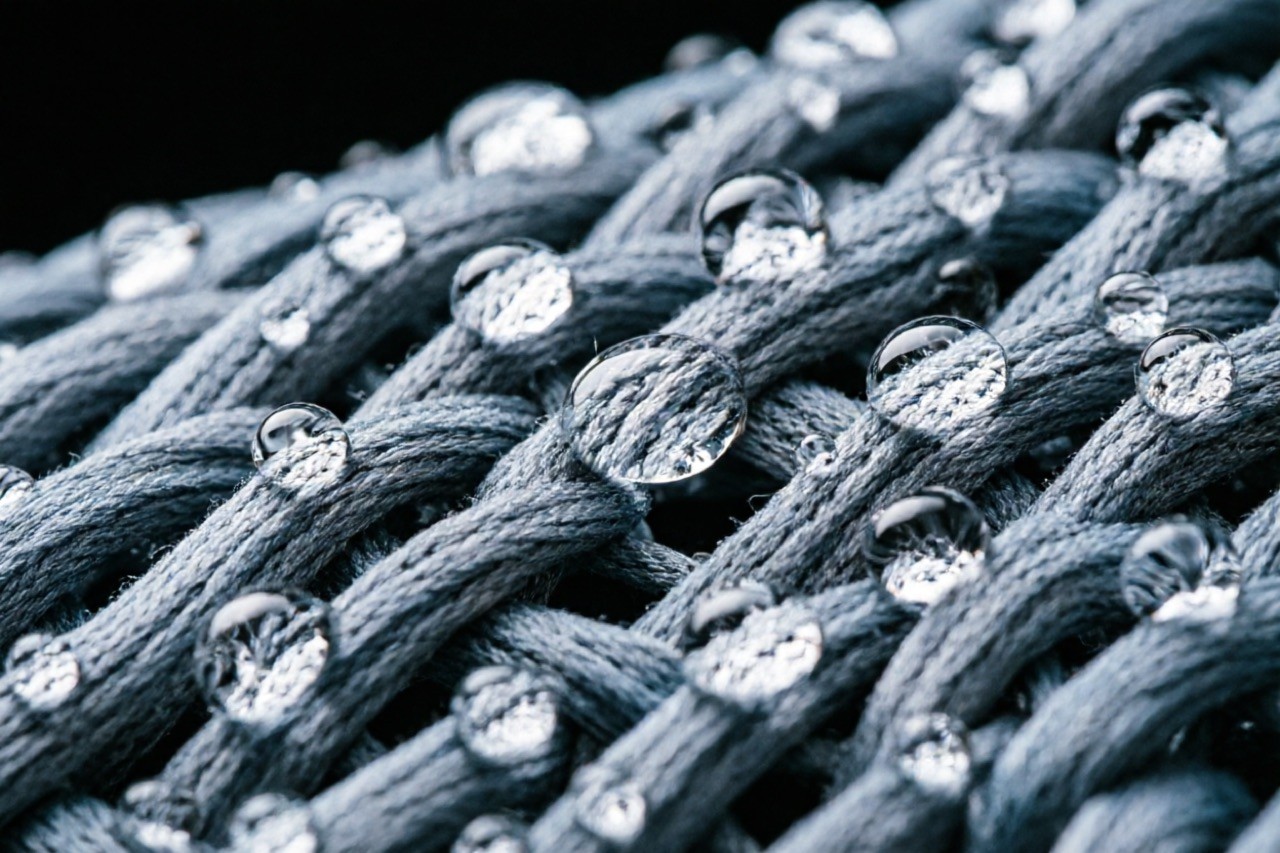
Moisture-wicking fabrics are engineered to move sweat from the skin to the outer surface of the fabric, where it can evaporate. This works because synthetic fibers like polyester and nylon are hydrophobic — they repel water at the fiber level — so moisture is pushed along the fiber surface and spread out for faster evaporation, rather than being absorbed like cotton.
What the 2024–2026 Research Shows
The performance claims on modern tank tops are backed by measurable engineering:
- A 2025 study in ACS Applied Materials & Interfaces created a biomimetic moisture-wicking membrane with an accumulative one-way transport capacity of 671% and an overall moisture management capacity (OMMC) of 0.80 — a dramatic improvement over standard nylon/polyester wicking fabrics (Yu et al., 2025).
- A 2026 study in the same journal developed a Janus (two-faced) textile combining unidirectional sweat transport with passive radiative cooling, achieving 69.2% solar reflectivity and 98.3% mid-infrared emissivity — reducing skin temperature by approximately 5.0°C compared with cotton under direct sun (Dai et al., 2026).
- A 2024 multilayered knitted fabric study demonstrated directional water transport where 76.7% of liquid was collected and managed, versus 0.06% for ordinary knitted fabric, while the ordinary fabric gained 555.4% more weight when wet (Wang et al., 2024).
For a tank top, these numbers translate into: less sweat pooling on your chest and back, faster drying between sets, and less thermal cling in hot gyms and summer runs.
GSM and Composition for Tanks
| Tank style | Recommended composition | GSM | Best use |
|---|---|---|---|
| Classic training tank | 100% polyester or 85/15 poly/spandex | 120–150 | Gym, cross-training, everyday |
| Dri-fit running tank | Polyester with mesh panels | 100–130 | Running, hot weather |
| Racerback women's tank | 80/20 nylon/spandex | 130–160 | Yoga, pilates, studio |
| Heavyweight muscle tank | 100% cotton or cotton/poly (240–280 GSM) | 240–280 | Streetwear, lifestyle, print-heavy designs |
| Seamless training tank | Nylon/spandex seamless knit | 140–180 | Compression-fit training tops |
Part 4: Tank Top Styles — Anatomy of the Category
Tank tops come in distinct silhouettes, each with its own pattern engineering.
Men's Styles
- Muscle tank — wide armholes, often with a lower neckline; the classic gym tank.
- Stringer tank — narrow shoulder straps; maximum shoulder freedom and the biggest print canvas.
- Boxy/oversized tank — streetwear fit; heavier fabrics, dropped shoulders, cropped or raw hems.
- Sleeveless tee — a tank cut from a tee pattern; more coverage at the shoulder.
Women's Styles
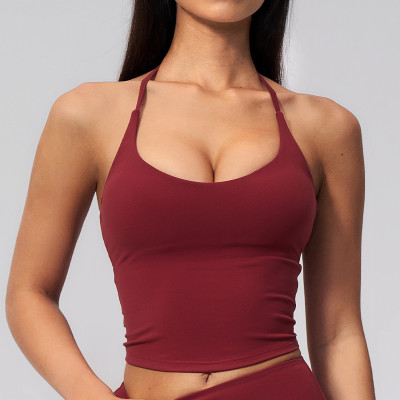
- Racerback — straps form a Y-shape across the back; maximum arm mobility, the dominant training style.
- Cropped tank — shorter length, often with a banded or raw hem; the athleisure standard.
- Fitted training tank — body-hugging cut with higher spandex content.
- Longline tank — extended length for coverage over leggings; yoga and pilates favorite.
Key Construction Points
- Armhole binding — the most common failure point in tanks. Rolled or ribbed binding moves with the arm; poor binding gapes and stretches out.
- Neckline finish — ribbed crew neck, V-neck, scoop or raw-cut; each needs different trim and stitching.
- Hem — straight, curved, banded, or raw-edge with anti-curl treatment.
- Side seams vs. seamless — seamed tanks allow precise shaping; seamless tanks (knitted in one piece) eliminate side chafing. Both have a place.
Part 5: Racerback and Women's Tanks — the Fastest-Growing Segment
The women's activewear segment is growing at 7.13% CAGR — the fastest of any end-user group (Mordor Intelligence 2026). Within tops, the racerback tank is the standout: it is the default training top for women, the canvas for studio branding, and the most requested style in private-label programs.
Engineering the Racerback
A quality racerback requires precise pattern work:
- The Y-back must be wide enough to cover a sports bra strap comfortably, but narrow enough not to slide off the shoulder during lateral movements.
- The armhole curve must clear the underarm without gapping when the arm is raised overhead.
- The front neckline must sit flat during forward bends and downward dog — which is why yoga brands favor a higher front scoop on racerback tanks.
- Fabric with good recovery (nylon/spandex blends) is essential to prevent the straps from stretching out over time.
If you are sourcing women's tanks, work with a manufacturer with genuine pattern expertise in this silhouette — it is not a men's tank with a smaller size grade. Our women's activewear manufacturer program and custom tank top product group are built around women's-specific patterns.
Part 6: Printing and Branding — Making the Tank Carry Your Brand
Tanks are print-first garments. Here is how the main methods compare for performance fabrics:
| Method | Best for | Durability on stretch fabric | Notes |
|---|---|---|---|
| Screen printing | Bulk orders, simple logos | Good with proper cure | Standard choice for gym merch |
| Heat transfer (DTF/vinyl) | Small runs, full-color designs | Good; check wash testing | Flexible, no setup for low MOQ |
| Sublimation | All-over prints, gradients | Excellent (ink bonds to polyester) | Only works on light/polyester fabrics |
| Embroidery | Premium logos, chest placement | Excellent | Adds cost and weight; avoid on very thin fabrics |
| Silicone/transfer logo | Seamless and thin tanks | Excellent | Common on seamless and premium styles |
Print-Ready Design Checklist
- Supply vector artwork (AI/PDF) with outlined fonts and minimum 3 mm clearance around print areas.
- Confirm the print area maximums for your chosen style — armhole-to-armhole width limits the chest print.
- Test prints on the actual fabric before bulk — stretch and moisture-wicking finishes can affect ink adhesion.
- Ask for wash-test reports (typically 3–5 washes) before approving bulk printing.
Part 7: The Manufacturing Process — From Brief to Bulk Tank Tops
Step 1: Design and Tech Pack
Your tank design is converted into a tech pack: flat measurements, graded size specs, fabric composition and GSM, trims, stitch types, print placement and tolerances.
Step 2: Sampling
The factory produces a pre-production sample for fit and construction approval. For tanks, the critical sample checks are armhole binding, neckline finish and overall fit balance (front-to-back drop). Expect 7–15 days per sample round.
Step 3: Bulk Fabric and Cutting
Bulk fabric is inspected against the approved sample, relaxed, and cut. Marker efficiency — how tightly pieces nest on the fabric roll — drives your unit cost; a skilled marker can save 5–10% on fabric consumption.
Step 4: Sewing
Tanks are relatively simple to sew — usually 6–10 operations — but stitch quality is everything: binding seams, hemming, and side-seam joining. Flatlock seams are standard for performance tanks to prevent chafing.
Step 5: Printing and Branding
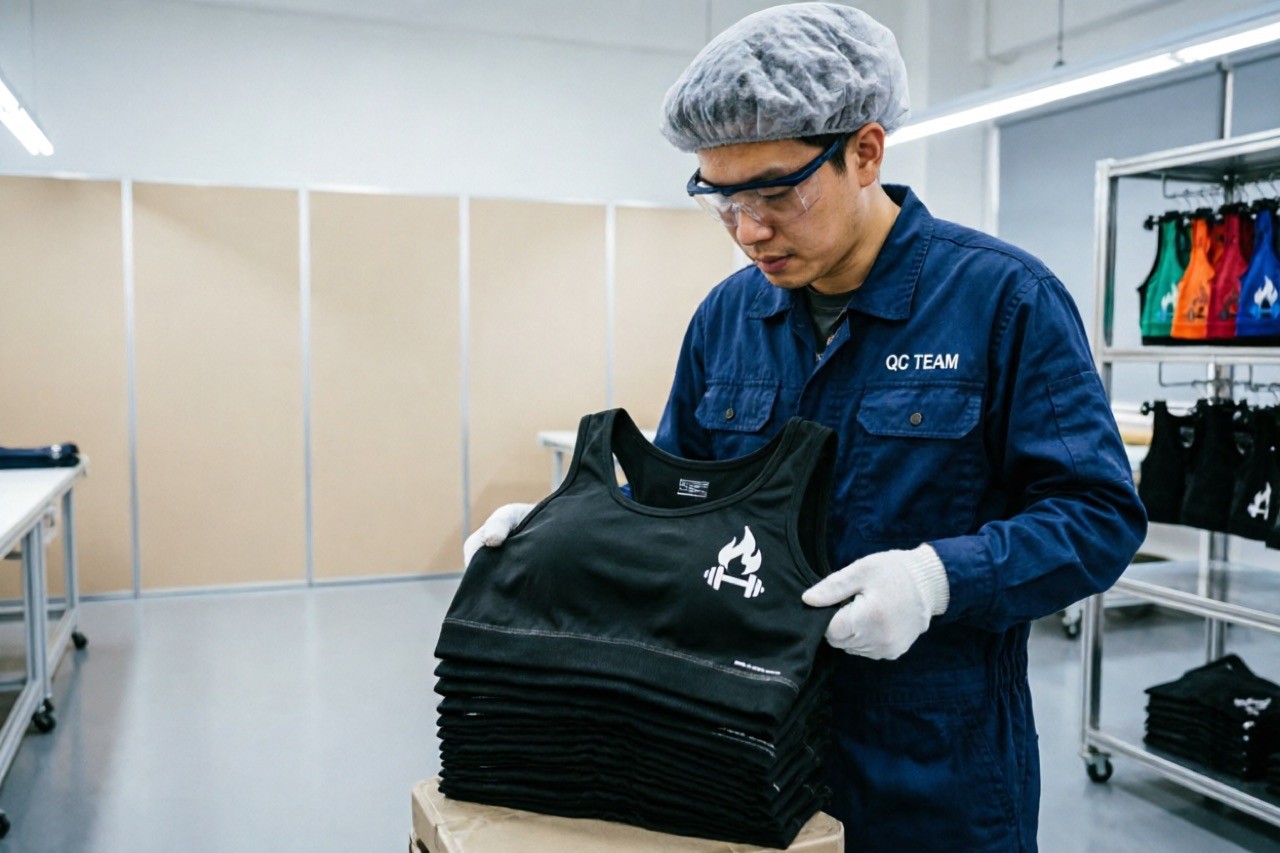
Prints, labels and trims are applied. Print QC checks alignment, color match against Pantone references, and adhesion on the actual fabric.
Step 6: Quality Control and Finishing
Final inspection (typically AQL 2.5), measurement verification against the size spec, then ironing, folding, poly-bagging and cartoning with your branding.
Part 8: Quality Checks for Tank Top Samples
Run these tests on your sample before approving bulk:
- Armhole stretch test — pull the armhole binding; it should stretch and recover without gaping.
- Neckline curl test — wash once; the neckline should not curl or wave.
- Sheer test — hold the tank up to light and stretch; check transparency, especially in light colors.
- Print wash test — 3 washes minimum; check cracking, peeling and color fade.
- Seam integrity — check side seams and hems for skipped stitches and loose threads.
- Recovery test — stretch and release the fabric; it should snap back without bagging.
Part 9: Sustainability Options for Tank Tops
Recycled Polyester (rPET)
Recycled polyester made from PET bottles is now standard in performance tanks. A 2026 study in Biodegradation confirmed that 100% PET and 100% rPET fabrics showed no degradation after 7 months in soil (Erayman Yüksel & Korkmaz, 2026) — recycled polyester is not biodegradable, but its environmental value lies in diverting waste and reducing virgin plastic production. Be honest in your labeling: "recycled" does not mean "compostable."
Low-Impact Dyeing and Finishing
Ask about water recycling, OEKO-TEX certification, and bluesign-approved suppliers. For white and light-colored tanks (the majority of the category), bleach-free optical brightening and eco-friendly finishes reduce environmental load.
Sustainable Cotton Options
For lifestyle tanks, organic cotton, recycled cotton and cotton-modal blends offer lower environmental impact — with the trade-off of reduced moisture-wicking performance, which matters only if the tank is positioned as lifestyle rather than performance.
Part 10: Common Tank Top Manufacturing Mistakes
- Cheap armhole binding. It stretches out after a few wears and the tank loses its shape. Quality binding + correct tension is non-negotiable.
- Wrong fabric for the claim. Selling a 100% cotton tank as "dri-fit" is a fast way to lose customer trust. Match fabric to positioning.
- Ignoring women's-specific patterns. A racerback tank graded from a men's pattern fits no one well. Women's tanks need women's patterns.
- Print placement errors. Printing too close to the armhole or over seams causes cracking and distortion. Respect print area limits.
- Skipping wash testing. Shrinkage in cotton blends and print failure in synthetics both show up in the wash — test before bulk.
- Forgetting the gym context. Your customer is sweaty, moving, and layering. Design for that reality, not for a hanger.
Part 11: MOQ, Pricing and Lead Times for Custom Tanks
MOQ
- Standard custom tanks: 300–500 pieces per color per style is the typical floor at Chinese factories.
- Low-MOQ programs: many custom tank top factories — including AOLAFREE — offer flexible starts around 100–200 pieces on stock fabrics, ideal for gyms, studios and startup brands.
- Print-on-order and DTF options lower the effective entry point for small-run branded merch.
Pricing Drivers
Fabric composition and GSM, print method, trims, order volume, and finishing. A basic polyester training tank is one of the most cost-efficient garments to produce; premium seamless and brushed-nylon styles sit higher.
Lead Times
- Sampling: 7–15 days per round.
- Bulk: 30–45 days (custom-dyed fabric adds 2–3 weeks).
- Shipping: 2–4 weeks sea freight; 3–7 days air.
See our MOQ and pricing and sample policy pages for the specifics.
Part 12: Tanks in Your Broader Range — Cross-Sell and Layering
Tank tops are natural cross-sell products:
- Gyms and studios buy branded tanks as merch — volume, repeat, seasonal.
- Athleisure brands use tanks as layering pieces under hoodies and jackets.
- Yoga brands pair women's racerback tanks with high-waist leggings and shorts.
- Streetwear brands use heavyweight printed tanks as statement pieces.
Pairing tanks with bottoms is where collections are built. Browse the custom tank tops collection, explore custom T-shirts for the sleeved equivalent, or read our activewear outfit guide for styling-driven product development.
Ready to Build Your Tank Top Line?
Tank tops are the quiet workhorse of activewear: high volume, low price point, constant reorders, and the best branding surface in the business. With gym & fitness generating 36.42% of global activewear revenue and the women's segment growing at 7.13% CAGR, a technically sound tank program is one of the fastest paths to repeat revenue for a sportswear brand — provided the fabric, pattern and print quality are right from the first order.
At AOLAFREE, tanks are one of our core categories. As a custom sportswear manufacturer we produce men's and women's tanks — muscle, stringer, racerback, cropped and seamless — with mill-tested fabrics, women's-specific pattern engineering, print methods tested for stretch fabrics, and AQL quality control on every batch. You can meet the people behind the machines on our About Us page and see how our factory operates in the factory strength overview. Explore our custom tank top manufacturing program or the tank top product group to see what we build.
Ready to spec your tanks? Tell us your target style, fabric requirements, print plans and order volume — we will recommend compositions and GSM ranges, confirm the best print method for your design, and send samples for wash and fit testing. Request a quote and MOQ details, review our sample policy, or contact our team — we typically respond within one business day.