
The Right Fit: A Data-Backed Women's Guide to Leggings, Sports Bras and Activewear Sizing
Here is a number most size charts will not tell you: fit is the #1 reason women stop wearing activewear they already own. Industry analyses consistently rank size and fit as the leading cause of online apparel returns — research cited by retail analysts such as Coresight Research puts fit-related returns at roughly 40% of apparel returns, and sizing inconsistency between brands is a primary driver. The garment is not bad. It is just chosen for the wrong body, the wrong activity, or the wrong support level — and then worn once, washed once, and exiled to the back of the drawer.
The consequences are measurable in the lab too. Biomechanics researchers at the University of Portsmouth's Research Group in Breast Health (Scurr et al.) have shown that during unsupported running, breast tissue moves in three directions, with vertical displacement reaching up to about 14 cm (5.5 inches). The right bra — properly sized and engineered for the activity — reduces that movement dramatically, which is why support level and band fit are not preferences; they are the product.
This guide is the fit manual we wish every size chart came with. It covers the three core pieces of a women's activewear wardrobe — leggings, sports bras, and tops — with the specific things to check before you buy, the common problems and how to fix them, and the honest truth about how sizing actually works across brands.
Part 1: Why Fit Fails (Before We Get to the Fixes)
Three forces work against you before you even try anything on:
1. Sizes are not standard. A size M in one brand can measure like an S in another and an L in a third. There is no global standard; each brand grades its patterns differently. The letter on the tag is a suggestion, not a measurement.
2. Bodies change. Weight shifts, muscle builds, hormones cycle, pregnancies happen. The size that fit you last year is a memory, not a fact. Measure yourself fresh when you shop.
3. Fabric behaves differently than you expect. A fabric with poor recovery fits great in the fitting room and bags out by lunch. A high-recovery fabric that feels snug will relax into a perfect fit. Fit is fabric + construction + size, not size alone.
The practical consequence: fit cannot be predicted from the tag. It has to be checked on the body. The good news is that checking takes two minutes once you know what to look for.
Part 2: How to Measure Yourself Properly (Ten Minutes, Once a Season)
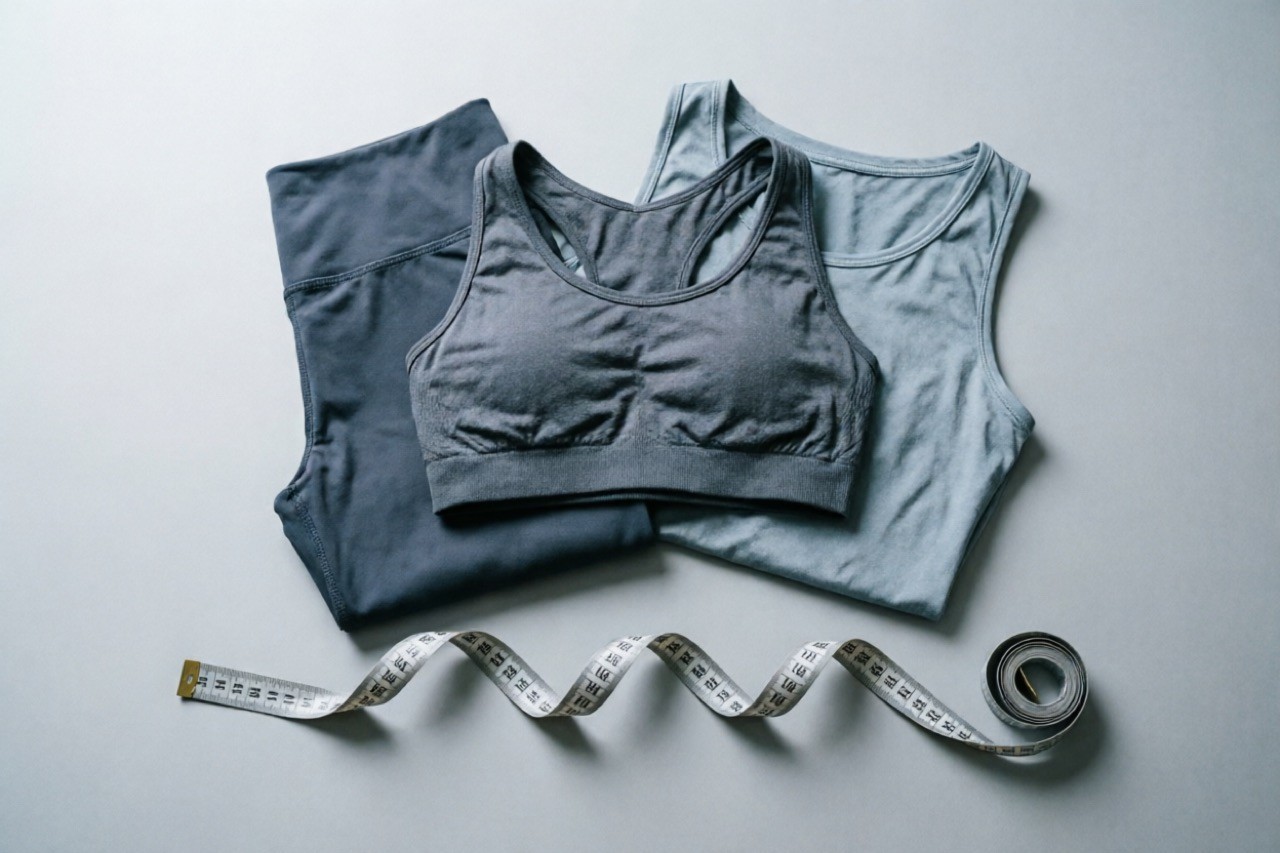
Do this once, write the numbers in your phone, and update them when your body changes. You will need a soft measuring tape and a mirror.
- Under-bust: wrap the tape snugly just below your bust, where a bra band sits. Exhale normally.
- Bust: wrap around the fullest part of your bust, tape level.
- Waist: your natural waist — the narrowest point, usually just above the navel. Do not suck in; that is not the number you need.
- Hips: around the fullest part of your hips and bottom, feet together.
- Inseam: from the top of your inner thigh down to your ankle bone. (Measure on a pair of pants that fit you well if it is easier.)
- Rise: from your natural waist, down the front, to the crotch. Compare this with the rise of leggings you already love — it tells you instantly whether a "high-rise" from a new brand will actually sit where you want it.
The Size-Chart Translation Skill
When you look at a brand's size chart, ignore the letter (S/M/L) and compare your measurements to the chart's measurements. If your waist is 68 cm and the chart says M fits 64–70 cm waist, M is your starting point — regardless of what the letter "means" to you. This one habit eliminates most fit disappointments. For brands, the same logic is why proper grading matters: a size chart that matches real bodies reduces returns, and choosing the right women's activewear manufacturer is largely a question of who gets this right.
Part 3: The Leggings Masterclass
Leggings are the most-bought, most-returned item in activewear. Here is the full checklist.
3.1 Rise and Torso Length
Rise is the distance from crotch to waistband, and it determines where the waistband lands:
- Mid-rise: sits at or just below the navel. Most neutral; suits shorter torsos well.
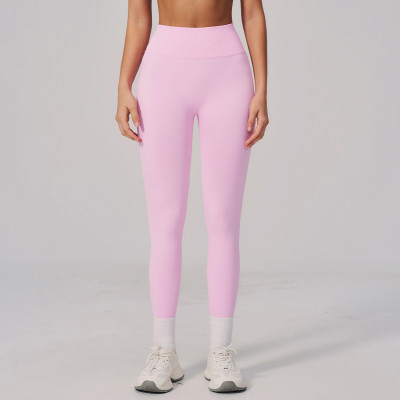
- High-rise: covers the navel. The most popular choice — smoothing, secure, and pairs with cropped tops.
- Ultra-high: extends above the navel toward the ribs. Maximum coverage and support.
The torso-length factor: if you have a long torso, a standard high-rise may sit lower than you expect. Measure the rise (Part 2) and compare. If a brand offers "long" or "tall" inseam options, they usually also adjust the rise — one of the hidden benefits of tall sizing.
3.2 Waistband Types
- Wide flat band: the most secure; distributes pressure across a wider area, less likely to dig in or roll.
- Fold-over band: adjustable by folding; soft and versatile, but can roll during intense movement.
- Seamless/bonded band: smooth, no lines under tops; very comfortable, but holding power varies.
- Drawcord band: adjustable fit, useful when your waist measurement falls between sizes.
The rolling-waist fix: a rolling waistband usually means the band is too loose (size down or choose a smaller band style), the fabric has lost elasticity (time to replace), or the rise is wrong for your torso (try a different rise).
3.3 Compression Levels
- Compression leggings: thicker, higher spandex content, snug from hip to ankle. They offer support, shaping, and a held-in feeling — ideal for training, travel, and days you want structure.
- Relaxed-fit leggings: thinner, softer, lighter compression. They feel like a second skin — better for yoga, stretching, lounging, and long sits.
Both are valid. The mistake is buying one for the other's job: wearing heavy compression to a restorative yoga class, or wearing relaxed fabric to a high-intensity session where you need support. And if tummy control is your goal, look specifically at high-waist styles with a wider waistband — the engineering behind high waisted leggings with tummy control is a wider band plus higher spandex in the upper panel, not just a taller rise.
3.4 The Squat Test (Opacity)
Do this in bright light — natural daylight is best — and in the actual color you are buying. Light colors (white, pastels, light greys) show through more than dark ones at the same GSM.
Protocol: put the leggings on, face a bright light or window, and squat deeply. Bend forward at the hips. Look at the fabric over the fullest part of the hips and thighs. If you can clearly see skin, the fabric is too sheer for that color — either size up (sometimes it is just too tight) or choose a higher GSM version.
3.5 Seams, Gusset, and Construction
- Flatlock seams: lie flat, prevent chafing. Run your finger along every seam — anything that catches your skin will rub in motion.
- The gusset: the diamond-shaped crotch panel. It adds freedom of movement, reduces fabric stress, and extends garment life. Its absence in a tight legging is a cost-cutting red flag.
- Coverstitch hems: stretch with the fabric instead of popping. Check the ankle hem stretches as easily as the fabric beside it.
3.6 Lengths
- Full length: to the ankle. Classic; can bunch on petite frames.
- 7/8 (ankle-grazing): ends just above the ankle bone. The most forgiving length for petites — no bunching — and visually lengthens the leg for everyone.
- Capri: mid-calf. Great for warm weather and certain activities.
- Shorts: for training, running, and summer.
3.7 Leggings Fit Problems and Fixes
| Problem | Likely cause | Fix |
|---|---|---|
| Waistband rolls down | Too loose, wrong rise, or worn-out elastic | Size down; try a different rise; replace |
| See-through at the hip/thigh | Too tight, or low GSM for the color | Size up; choose 200+ GSM; darker color |
| Baggy knees by midday | Poor stretch recovery | Choose higher spandex %; replace worn pairs |
| Camel toe | Rise too short or seam placement | Size up or try a higher rise; check the gusset |
| Ankles bunch | Pants too long | Choose 7/8 length or get them hemmed |
| Fabric pilling between thighs | Normal friction wear | Wash inside out; air dry; fabric shaver cleans it up |
| Waistband digs in | Band too tight or too narrow | Size up; choose a wider flat band |
| Legs feel loose after an hour | Poor recovery + relaxed fit | Choose compression level; check spandex % |
Part 4: The Sports Bra Masterclass
Sports bras are the most technical garment most women own, and the most misunderstood.
4.1 Support Levels — Match the Bra to the Activity
Support levels exist for a reason, and the reason is breast movement. The University of Portsmouth research cited above found unsupported breasts move in three dimensions during running — up, down, side to side, and in-and-out — and even a well-fitted sports bra only reduces, never eliminates, that motion. Your job is to match the level of support to the level of impact:
- Low support: yoga, pilates, stretching, walking, upper-body weight training.
- Medium support: cycling, dancing, hiking, gym circuits, most fitness classes.
- High support: running, HIIT, jumping, high-impact anything.
Buying a high-support bra for yoga is as uncomfortable as buying a low-support bra for running. If you do both, you need both — most women end up with 2–3 bras in rotation at different support levels. This is also why sports bra manufacturing separates designs by support level rather than offering one "all-purpose" bra.
4.2 Compression vs. Encapsulation (vs. Combination)
- Compression bras press the chest flat against the ribcage, limiting movement by flattening it. They are great for small-to-medium sizes and lower impact, and often the most comfortable for sleep and lounge.
- Encapsulation bras cup each breast separately, like a regular bra, controlling movement within each cup. They are better for larger sizes and higher impact — they support without flattening.
- Combination bras do both (molded cups + compression panels) and are the gold standard for high-impact wear in larger sizes.
4.3 The Band Is 80% of the Support
This is the most important fact in sports bra fitting: the band under the bust does most of the work. The straps are helpers, not the main event.
- The band should sit level all the way around — not riding up in the back.
- It should feel snug on the loosest hook (so you can tighten as the bra ages).
- You should be able to breathe deeply and move without the band shifting.
- The ride-up test: if the back band rides up, the band is too loose — size down in the band, not the cup.
4.4 Straps, Cups, and the Rest
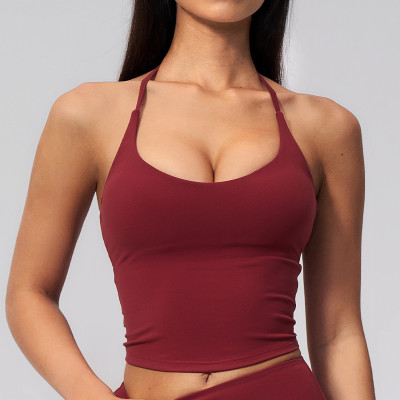
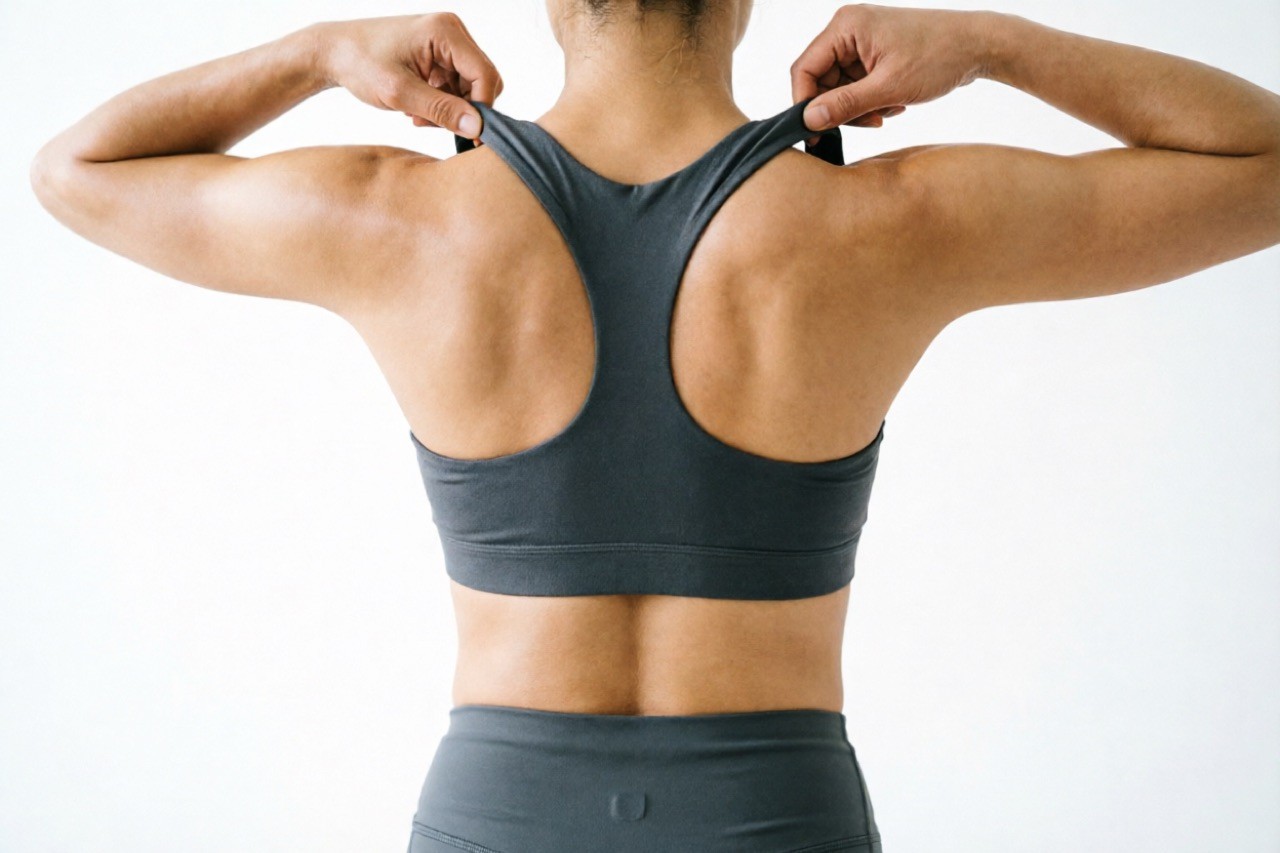
- Straps: adjustable straps win for fit — you can dial them in. Racerback styles stay put under movement and spread the load across the back, but they are harder to adjust and can pressure the shoulders on larger busts.
- Straps that dig or slip mean the wrong size or style — digging means too tight (or too narrow); slipping means too loose.
- Cups: in an encapsulation bra, the cup edge should lie flat against the sternum — if it floats, the cup is too small or the band too big.
- The "one-finger" test: you should be able to slide one finger under the band — not two, not zero.
4.5 When to Replace a Sports Bra
Sports bras lose support over time — the elastic fatigues invisibly. Signs it is time:
- The band no longer feels snug on the tightest hook
- The chest moves noticeably more during your usual activity
- Fabric has lost its stretch or shows permanent creases
- Straps no longer adjust enough
- The bra has been through heavy rotation for 6–12 months (frequent users)
4.6 Sports Bra Problems and Fixes
| Problem | Likely cause | Fix |
|---|---|---|
| Band rides up | Band too loose | Size down in the band |
| Straps dig in | Too tight, too narrow, or wrong style | Adjust; try wider straps or racerback |
| Straps fall off shoulders | Too loose, or bra is worn out | Tighten; replace if elastic is gone |
| Chest spills over the top | Cup too small | Size up in the cup |
| Fabric chafes under the arms | Wrong cut or worn-out fabric | Try a different style; replace |
| Hard to breathe | Band too tight or too much compression | Size up in the band; lighter compression |
Part 5: The Tops Masterclass
Tops are the least technical and most varied piece — but fit still makes or breaks them.
5.1 Fitted vs. Relaxed
- Fitted tops (ribbed, seamless, or stretch-knit) work for practice — they do not get in the way, and they layer under jackets. Choose fitted when you will be moving.
- Relaxed tops (tees, tanks, hoodies) are for warm-up, recovery, and everyday wear. They are about comfort, not performance.
5.2 Necklines
- Crew neck: modest, classic, works with most faces and busts; can feel closed-in on fuller busts.
- Scoop neck: flatters more face shapes, opens the neckline, balances a fuller bust.
- V-neck: draws the eye up, elongates the neck, flatters pear shapes.
- Racerback: shows off the back, allows full arm range — popular for yoga, pilates, and gym work.
5.3 Length
- Cropped: pairs with high-rise leggings (the high waist covers the gap). Flattering proportions for many bodies.
- Hip-length: the most versatile for coverage and layering; tucks or ties.
- Longline/tunic: coverage-first; best with fitted bottoms to avoid the "all fabric" look.
5.4 Fabric Weight and Drape
- Lightweight knits: drape softly, look relaxed; may cling if too tight.
- Ribbed knits: hold their shape, add texture, flatter the torso — the workhorse of the athleisure top.
- Seamless knits: smooth, no side seams, comfortable against skin; support varies.
5.5 Top Problems and Fixes
| Problem | Likely cause | Fix |
|---|---|---|
| Gap at the neckline | Too big in the shoulders, or wrong neckline | Size down; try a scoop or higher neck |
| Seam twists around the torso | Poor construction or wrong cut for your shape | Try a different brand/cut |
| Chafing at the underarm | Seam placement or too-tight armhole | Size up; try racerback or seamless |
| White top is see-through | Low GSM or thin knit | Layer a neutral cami; choose a thicker knit |
| Crop rides up | Too tight or wrong proportions | Size up; pair with higher-rise bottoms |
Part 6: Beyond Leggings — Shorts, Capris, Flared, Joggers
- Shorts: check the inseam (longer = more coverage and less ride-up); look for a gusset and a waistband that stays put; check the leg opening does not ride up during squats.
- Capris: fit like leggings; the length is a preference, not a fit issue.
- Flared/wide-leg: the waist and hip must fit well — the flare does the rest. Check the hip does not pull when you sit or stride. Wide-leg and flare cuts are a growing part of custom leggings production precisely because they demand different grading from straight-leg styles.
- Joggers: check the ankle cuff is not too tight (a common annoyance) and the rise suits your torso.
Part 7: Body-Shape Matching — A Kind, Practical Guide
Fit is individual, but a few reliable starting points help:
- Pear (hips wider than shoulders): high-rise waists prevent back gapping; flared and wide-leg pants balance proportions; fitted or V-neck tops draw the eye up.
- Apple (fuller through the middle): high-rise with a flat, wide waistband that will not roll; longline bras that smooth rather than pinch; open layers create a vertical line; avoid tight crops.
- Athletic/rectangle (balanced, straight): most cuts work; waist-defining details (ties, ruching, high rise) add curve; flared pants add shape.
- Hourglass (bust and hips balanced, defined waist): high-waist bottoms and fitted tops celebrate the proportions; match the waistband to your natural waist.
- Petite: 7/8-length bottoms avoid bunching; high rises lengthen the leg; keep proportions fitted rather than oversized.
- Tall: full-length leggings, flares, and longline tops are your friends; look for "tall" sizing where the rise and inseam are adjusted, not just the length.
These are starting points, not rules. The best fit is the one you forget you are wearing. And if your size falls outside the standard range — including plus-size yoga pants with tummy-control waistbands — the fix is the same: measure, compare against the chart, and prioritize brands that grade properly across the full size range.
Part 8: Activity-Based Selection Matrix
| Activity | Leggings | Bra | Top |
|---|---|---|---|
| Yoga (flow) | High-rise, relaxed or light compression, 200–240 GSM | Low-medium support, racerback OK | Fitted or relaxed; racerback tanks |
| Pilates | High-rise, good recovery, coverage | Low-medium support | Fitted, ribbed |
| Running | Mid-high rise, high recovery, reflective | High support, encapsulation or combo | Lightweight, wicking, mesh |
| HIIT / strength | Compression, high GSM | High support | Fitted, sweat-wicking |
| Hiking / travel | High-rise, relaxed, comfortable | Medium support, wireless OK | Relaxed, quick-dry |
| Loungewear | Relaxed-fit or flared | Low support or bralette | Oversized, soft knit |
Part 9: Sizing Across Brands — Why Your Size Changes (and How to Shop Anyway)
The truth: your size genuinely varies between brands because brands grade their patterns differently — some run small, some run generous, some cut for athletic builds, some for hourglass proportions. It is not you.
How to shop anyway:
- Measure yourself (Part 2) and keep the numbers in your phone.
- Check each brand's size chart against *your measurements*, not your usual letter.
- Read reviews for "runs small/large" notes and for what body types reviewers mention.
- Buy from brands with generous return policies when trying a new size system.
- For custom or branded production (your own label): ask the manufacturer for a sample in your target size range and grade chart — a proper sample session eliminates guesswork for your customers too. AOLAFREE's design team runs exactly this process on every custom women's high-waist yoga pants order: pattern grading is checked against real fit models, not just a size table.
Petite, tall, and plus notes: look for brands that adjust the *rise* and *proportions*, not just the length. A petite legging that is merely shortened still has the wrong waist placement; a proper petite pattern repositions everything. The same logic applies in reverse for tall and plus lines.
Part 10: The Ten-Step Try-On Checklist
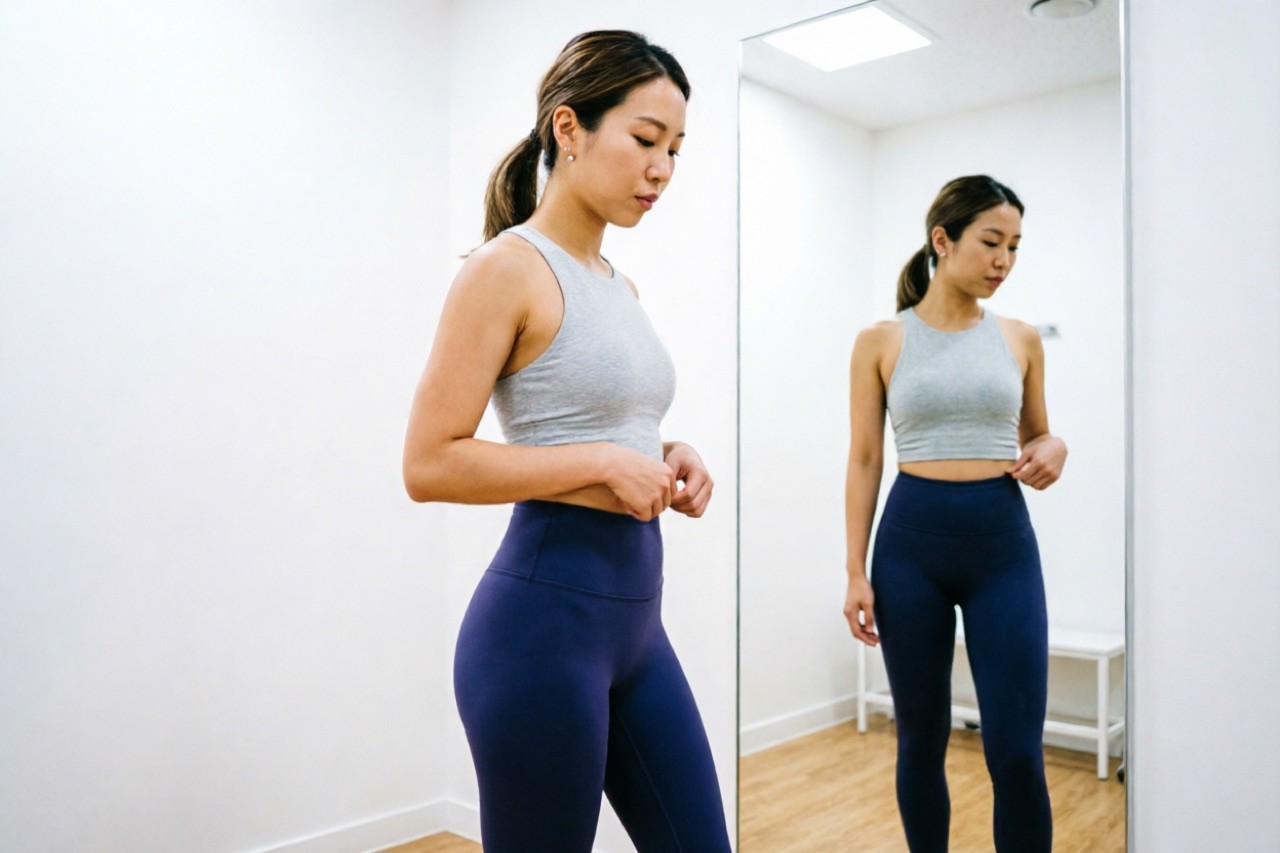
When a package arrives, run this in ten minutes:
- Check the label: fabric %, GSM if listed, care instructions.
- Feel the fabric: smooth, substantial, no waxy or papery feel.
- Stretch-and-snap test on the fabric.
- Put the leggings on: waistband sits where you want, does not roll or dig.
- Squat test in bright light (front and side).
- Move: lunges, a few jumps, a bend — nothing pinches, nothing shifts.
- Check the bra band: level, snug on loosest hook, one finger under.
- Move in the bra: jump, reach overhead — support feels right, no spill.
- Check the top: no gap, no twist, no chafe points.
- The honesty check: would you wear this for a full day? If not, back it goes.
Part 11: When to Replace Activewear — The Four Tests
- The stretch test: fabric stays loose after washing — elastic is gone.
- The opacity test: light now shows through previously opaque fabric.
- The waistband test: the band rolls or rides regardless of fit.
- The elastic test: bra band feels loose on the tightest hook.
Each failed test = time to replace. Depending on rotation, quality activewear lasts 1–2 years of regular use — and replacing it on time keeps the rest of your outfits looking right. If you are a brand, this lifecycle is also your retention engine: a garment that fits and lasts is what turns a first order into a reorder.
Part 12: FAQ
Q: Why does my size change between brands? A: Brands grade patterns differently. There is no global size standard — compare measurements, not letters.
Q: Should I size up in leggings? A: Only if they are sheer when stretched or dig in. If they feel snug but recover well, that is correct — they will relax into a perfect fit.
Q: How do I know if a sports bra fits? A: Band level and snug on the loosest hook, chest contained without spill, straps not digging, and movement feels controlled in your activity.
Q: What is the most forgiving legging length for petites? A: 7/8 (ankle-grazing) — no bunching, and it visually lengthens the leg.
Q: My leggings roll down — is it the brand or me? A: Usually one of three: the band is too loose (size down), the rise does not match your torso, or the elastic is worn out.
Q: Do I need different bras for different workouts? A: Yes. Support level should match impact: low for yoga/pilates, medium for classes, high for running/HIIT.
Q: How often should I replace sports bras? A: With regular use, roughly 6–12 months, or when the band no longer fits snugly.
Q: Can I fix leggings that pill? A: A fabric shaver removes pilling; washing inside out and air drying prevents it. Pilling between the thighs is normal friction wear.
Get the Fit Right From the Factory Floor
Fit is a system, not a guess. It is the difference between a garment that gets worn and one that gets returned — and in a category where fit-related returns run at roughly 40% of apparel returns, getting it right is a business advantage, not a detail.
At AOLAFREE, we design women's activewear — from the aola line to full custom sports bra and custom leggings programs — around the fundamentals in this guide: tested waistbands, consistent sizing across colors, proper rises for real torsos, and fabrics that keep their shape wash after wash. Every style goes through pattern development and pre-production samples checked against real bodies and real movements before it reaches you, whether you buy ready-made or work with us on an OEM/ODM order. You can see the process behind that standard on our factory strength page and our OEM/ODM overview.
Struggling with returns or fit complaints in your current line? Send us your size chart and your problem styles — we will audit the grading, recommend pattern adjustments, and cut a fit sample you can test on real customers. Contact AOLAFREE to start the conversation, or request a sample first to feel the difference before you commit. We usually respond within one business day.